
 EN
EN
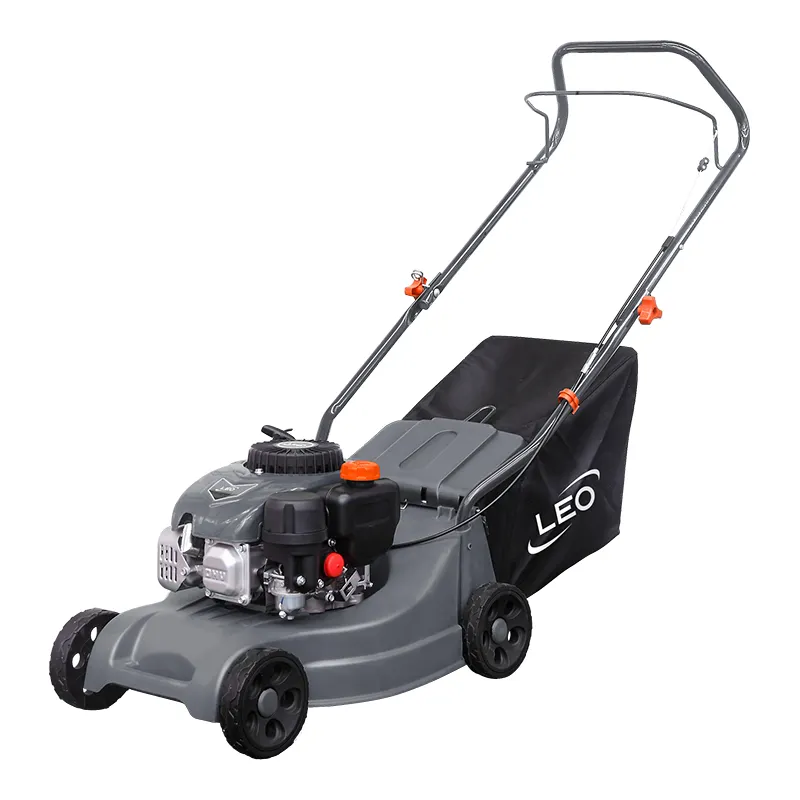
The Efficiency Inversion: Why Ride-On Mowers Underperform on Small Lawns
Declining ROI in Sub-0.25-Acre Ride-On Usage
For small lawns under a quarter acre, ride-on mowers just don't pay off. The cost per square foot ends up way higher than what someone would spend on a good quality self-propelled walk behind model. Most of this extra expense comes from burning through fuel or draining batteries at a much faster rate. These machines also lose value quicker too. We're talking around 18% drop in worth each year compared to about 9% for walk behinds according to some recent industry reports. What looks like time saved often turns into real money lost in the long run. Another problem is how hard they are to turn around in tight spaces. Studies show that about three quarters of these tiny properties need almost twice as many passes when using ride ons because of their limited turning ability. That takes away whatever edge they might have had. For folks dealing with small yards, there's really no contest between the two options when it comes to getting around easily and keeping maintenance costs down.
Energy Transfer Loss and Operational Overhead in Compact Ride-Ons
Standard ride-on powertrains suffer significant energy waste on small-scale terrain. Hydrostatic transmissions incur 25% higher parasitic loss below optimal load thresholds, while combustion engines idle 60% of runtime during tight turns (Turf Tech Institute 2023). These inefficiencies manifest as:
- Excessive vibration transfer, increasing maintenance labor by 30%
- Tire compaction damage to turf from low-speed maneuvering
- Reduced blade tip speed, compromising cut quality near obstacles
Operational workflow adds further overhead: average setup and storage time is 15 minutes per session—triple that of walk-behinds. For properties under 0.25 acres, these cumulative penalties eliminate any theoretical time advantage. The inherent design compromises of scaled-down ride-ons magnify losses, confirming self-propelled walk-behinds as the precision solution for compact landscapes.
Rideon vs Walkbehind Mower Efficiency Across Lawn Size and Terrain
The 0.3-Acre Efficiency Threshold: Where Walk-Behinds Gain Clear Advantage
A clear efficiency tipping point emerges at 0.3 acres (≤13,000 sq ft). Below this threshold, walk-behind mowers outperform ride-ons by 22–38% across key operational metrics—including time-to-completion, energy use, and labor intensity (Landscape Management Journal 2023). This inversion stems from three structural disadvantages for ride-ons in confined spaces:
- Acceleration/deceleration cycles consume 15–27% of total mowing time
- Energy conversion penalties: compact ride-ons waste 18% of engine output in transmission systems, versus direct-drive efficiency in walk-behinds
- Operational burden: dismounting to clear obstacles adds 32% more time per incident than seamless walk-behind navigation
Contrary to popular belief, self-propelled walk-behind mower efficiency peaks precisely where entry-level ride-ons become cost-prohibitive—yielding an average annual savings of $210 on 0.25-acre properties when factoring fuel, maintenance, and depreciation.
Lawn Geometry Matters More Than Area: Navigability, Obstacles, and Turn Radius
Total acreage is secondary to terrain complexity in determining mowing efficiency. Properties with more than eight obstacles per acre—or pathways narrower than six feet—see 40% faster mowing times using commercial-grade walk-behinds versus subcompact ride-ons. Critical geometric advantages include:
| Feature | Walk-Behind Advantage | Efficiency Impact |
|---|---|---|
| Turn Radius | 50–70 inches | +28% time savings |
| Narrow Corridors | <42-inch clearance | +34% productivity |
| Slope Navigation | 15°–25° inclines | +19% traction |
Perimeter-to-area ratio is equally decisive: lots exceeding a 1:120 ratio (ft:sq ft) consistently favor walk-behinds regardless of total size. This explains why 68% of professional landscapers deploy walk-behinds for urban lots under 0.4 acres (National Turf Survey 2024).
Self-Propelled Walk-Behind Mowers as the Precision Efficiency Standard
Battery-Powered Self-Propelled Units vs Entry-Level Ride-Ons: Real-World Output Comparison
For small yards around half an acre or less, battery powered self propelled walk behind mowers really shine when it comes to getting the job done right. According to the 2023 Turf Management Study, basic ride on models actually use about 40 percent more power just trying to get around those tight corners. The self propelled ones work differently though. They send power straight to where it needs to go without all the energy loss that happens in smaller ride on machines. Most people find they can finish cutting their quarter acre plot about 15 minutes faster thanks to how these mowers handle turns and deal with obstacles like garden beds or flower boxes scattered across the lawn.
Key performance differentiators include:
- Terrain adaptation: consistent blade speed maintained on slopes up to 15°
- Resource utilization: 92% energy-to-cut efficiency versus 78% for gas-powered ride-ons
- Operational costs: $26/year in electricity versus $89+ annually for ride-on fuel and maintenance
With zero idle consumption, adaptive speed controls, and integrated motor-blade coupling, these units maximize trimmed output per charge. For geometrically complex lawns under 0.3 acres, their precision translates directly into measurable time, energy, and cost savings—solidifying their role as the modern efficiency standard.
FAQ
Why don't ride-on mowers perform well on small lawns?
Ride-on mowers have inherent inefficiencies such as high energy waste, difficulty maneuvering in tight spaces, and significant operational overhead, making them less suitable for small lawns where walk-behind mowers outperform them.
What is the efficiency threshold for ride-on vs walk-behind mowers?
The efficiency threshold is around 0.3 acres. Below this size, walk-behind mowers are more efficient due to their operational advantages and reduced costs compared to ride-ons.
Are battery-powered walk-behind mowers cost-effective?
Yes, they offer significant energy and cost savings for small lots, with lower operational costs and efficiency in handling complex lawn geometries.