
 EN
EN
Maneuverability Over Speed: Why Large Properties Demand Specialized Mowers
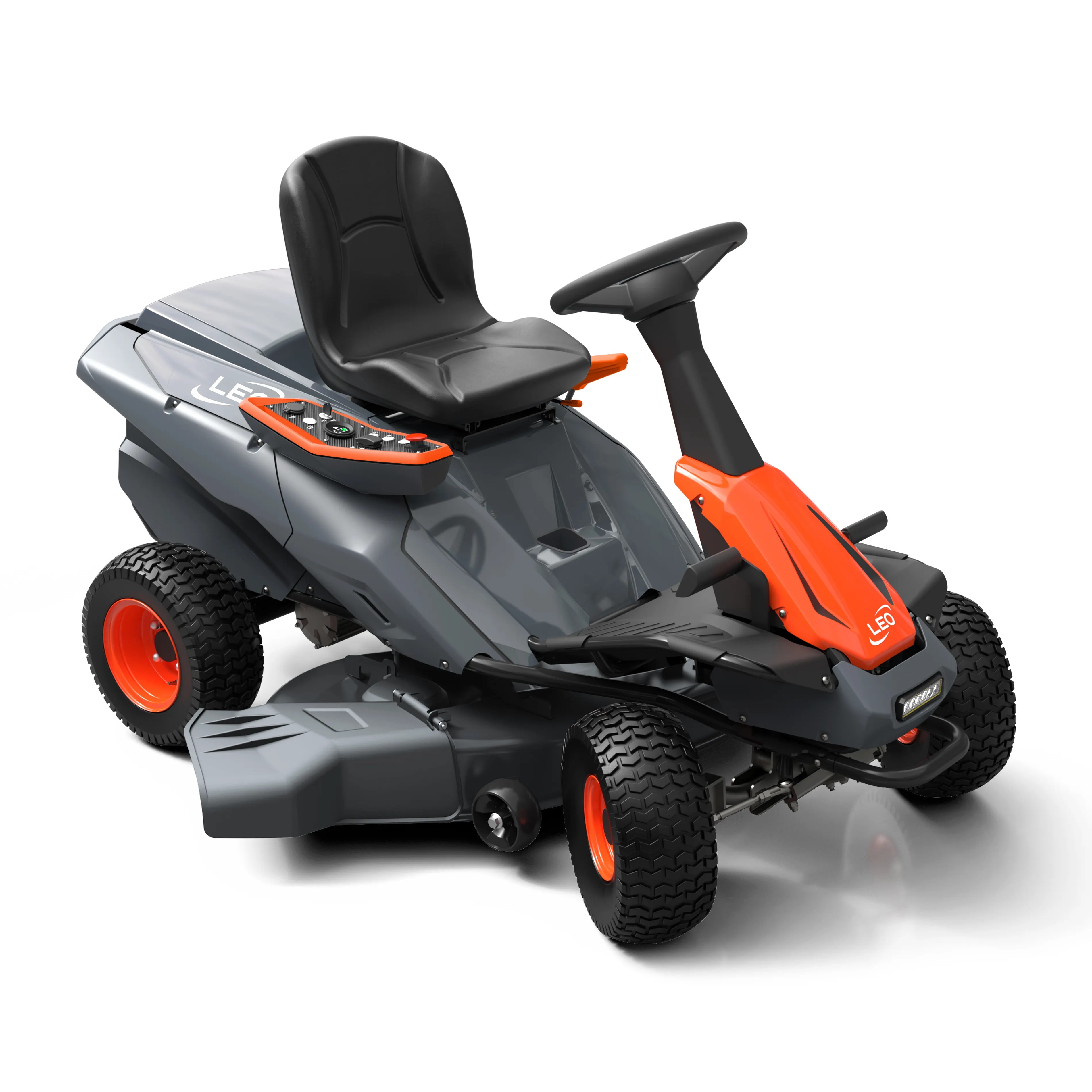
The productivity bottleneck: How poor obstacle navigation cuts efficiency on 5+ acre sites
When dealing with large properties over five acres, landscapers typically waste about 35 percent of their actual cutting time just trying to navigate around all those trees, flower beds, and sprinkler lines (the National Turfgrass Federation reported this in their 2023 study). Most of this wasted time comes down to how big machines need so much space to turn around. Many standard mowers simply can't pivot tightly enough, which means workers end up going back and forth across the same areas multiple times. This not only burns through extra gas but also adds countless unnecessary hours onto job estimates that should be based purely on property size.
Spatial efficiency as the core metric: Why tight turning and precise path control outperform raw mowing speed
True productivity hinges on spatial efficiency: minimizing overlap and directional changes per acre. Unlike raw speed—which only benefits long, straight passes—tight turning radii (under 42") enable operators to:
- Execute clean perimeter trimming without repositioning
- Maintain continuous cutting paths around complex landscapes
- Reduce uncut “skip zones†by 68%, per the American Society of Agricultural and Biological Engineers (ASABE) 2024 field study
Zero-Turn Mowers vs. Traditional Riding Mowers: Choosing the Right Mowers for Scale and Complexity
Market shift: Zero-turn mowers now lead 70%+ of commercial contracts for acre properties
More and more commercial landscapers are putting maneuverability at the top of their list when dealing with big properties these days. Zero turn mowers have taken over most contracts actually covering between one to ten acres because they just work so much better around all those pesky obstacles. Traditional riding mowers need this wide sweeping motion to make turns while zero turn units can spin right where they stand. No more wasting time moving back into position after every little obstacle. Landscapers report saving anywhere from thirty to forty percent off trimming time on properties packed full of things like trees, flower beds, or other landscape features that get in the way.
Matching turning radius to terrain complexity and loop-path density
The defining specification is turning radius:
- High-density terrains (orchards, playgrounds, mature residential lots): ≤22" radius enables precise navigation around clustered obstacles
-
Open acreage (sports fields, pastures): ≥48" radius suffices for long, uninterrupted passes
Operators report 25% faster completion on properties with >15 obstacles per acre when using zero-turn mowers. For simple loop paths with minimal obstructions, traditional mowers remain a cost-effective choice—especially where slope stability or operator familiarity are top priorities.
Stability and Safety: Balancing Agility with Low-Center-of-Gravity Design on Sloped Terrain
Rollover risk analysis: Navigating the trade-off between zero-turn agility and stability
Zero turn mowers offer amazing maneuverability but come with stability issues on hills steeper than about 15 degrees. When making sharp turns on these slopes, the risk of flipping over goes way up. The steering system itself actually makes things worse compared to regular riding mowers because it naturally lifts the mower higher off the ground. Engineers have been working on ways to fix this problem through smart weight placement. Moving heavy parts like engines, batteries, and drive components down lower in the frame cuts rollover chances by roughly 15 to 20 percent while still keeping the mower responsive. Getting that low center of gravity really matters when dealing with uneven ground or unexpected changes in elevation, especially when the grass bag is full and adds extra weight. With new safety standards from organizations like ANSI and OSHA putting more pressure on how mowers perform on slopes, companies are tweaking everything from wheel spacing to how weight is spread across the machine. They need to find that sweet spot between being nimble enough to dodge rocks and debris yet sturdy enough to stay upright on those tricky inclines where most accidents happen.
Deck Lift Systems and Real-World Obstacle Navigation for Professional Mowers
Field evidence: 62% of operator-reported damage occurs during curb, irrigation head, and grade-transition maneuvers
According to a recent survey conducted in 2024 among around 300+ professional lawn care workers, most mower damage actually happens when moving between different terrains. Think about those tricky spots we all know well - curbs, irrigation heads, and places where the ground suddenly drops or rises. That's where things tend to go wrong. Newer deck lift systems help out a lot here by allowing quick adjustments either hydraulically or electronically. When approaching these problem areas, operators simply raise the cutting deck just in time to avoid hitting anything hard enough to bend blades or warp the deck itself. This saves money on repairs and keeps machines running longer. What many folks don't realize is how important consistent cutting height becomes over rough terrain. Some top-of-the-line mowers now come equipped with sensors that work alongside lifting mechanisms. These detect potential hazards ahead and automatically lift the deck before impact occurs. Instead of relying solely on operator reaction time, this technology turns what used to be guesswork into something much more predictable for maintenance budgets and overall equipment longevity.
FAQ
-
Why is maneuverability more important than speed for large properties?
Maneuverability is key because it minimizes the time wasted in navigating obstacles, reducing unnecessary passes and enhancing productivity.
-
What are the advantages of zero-turn mowers over traditional riding mowers?
Zero-turn mowers offer precise navigation with a smaller turning radius, making them ideal for properties with numerous obstacles.
-
How can rollover risks be mitigated on sloped terrains?
Using mowers with a low-center-of-gravity design and smart weight distribution helps reduce rollover risks on sloped terrains.
-
How do deck lift systems benefit professional mowing operations?
Deck lift systems allow operators to adjust the cutting height quickly, avoiding damage to the mower when transitioning over curbs or uneven terrain.
Table of Contents
- Maneuverability Over Speed: Why Large Properties Demand Specialized Mowers
- Zero-Turn Mowers vs. Traditional Riding Mowers: Choosing the Right Mowers for Scale and Complexity
- Stability and Safety: Balancing Agility with Low-Center-of-Gravity Design on Sloped Terrain
- Deck Lift Systems and Real-World Obstacle Navigation for Professional Mowers
- FAQ