
 EN
How Do Lawn Mower Blades Affect Grass Cutting Quality?
A lawn mower can have the right engine, deck width, and drive system yet still leave a rough-looking lawn if its blade is dull, damaged, or poorly matched to the job. As a garden machinery technical consultant, I start cut-quality troubleshooting at the cutting edge. The mower blade is the component that actually meets the grass, so its sharpness, shape, balance, and condition determine whether the machine slices cleanly or pulls and tears.
Good grass care is not about chasing a razor-like edge. It is about keeping the entire cutting system clean, secure, balanced, and suited to the grass conditions. A well-maintained lawn mower produces a more even finish, while a neglected one can leave ragged tips, streaks, clumps, and vibration that make every pass less consistent.
Why a clean cut matters
Grass leaves are living tissue. A sharp mower blade makes a cleaner cut across the leaf, which gives the lawn a tidier appearance immediately after mowing. A dull edge tends to crush or tear the tips instead. Those shredded tips often dry to a pale brown or whitish color, so a lawn can look stressed even when the mowing height was correct.
Extension guidance also links torn grass tissue with greater vulnerability to environmental stress and pests. That does not mean every uneven tip will create a disease problem, but it is a practical reason to treat cut quality as part of routine grass care rather than as a cosmetic detail. In short, the lawn mower should cut, not beat, the grass.
What the mower blade changes in the cutting system
Sharpness controls the finish at the tip
The most obvious factor is edge condition. A sharp mower blade needs less force to sever the leaf, so it produces a more uniform finish. Nicks, rounded edges, and heavily worn corners tear instead of slice. Look closely at the lawn one day after mowing: frayed, browned tips are a useful clue that the blade needs attention.
Sharp does not mean knife-sharp. A mower blade needs a durable, even cutting edge that can tolerate sand, twigs, and normal debris. Over-grinding a thin edge can make it fragile, while an edge left too blunt compromises the cut. The right result is an even bevel maintained according to the mower manufacturer's instructions.
Blade shape influences airflow and clipping movement
A mower blade does more than cut. Its curved or lifted sections move air and clippings through the deck. High-lift designs generally help direct clippings toward a bagging discharge, while mulching-oriented designs keep clippings circulating longer so they can be cut smaller. A general-purpose blade may be adequate for ordinary mowing, but it may not perform as well when wet grass, tall growth, or a particular discharge method changes the demands on the cutting system.
This is why a clean edge alone cannot solve every finish problem. If the deck is packed with damp clippings, airflow falls off and the lawn mower may leave clumps or miss standing grass. Before changing blade type, inspect the underside of the deck, discharge path, and collection system. The blade, deck, and grass conditions work together.
Blade material and wear affect durability, not just sharpness
Blade material matters because it influences how well a blade holds its profile through normal use. However, a harder or heavier blade is not automatically the right choice. The replacement must match the mower's approved length, center-hole pattern, thickness, lift profile, and rotation direction. An incorrect blade material or pattern can alter airflow, reduce clearance, or overload the cutting system.
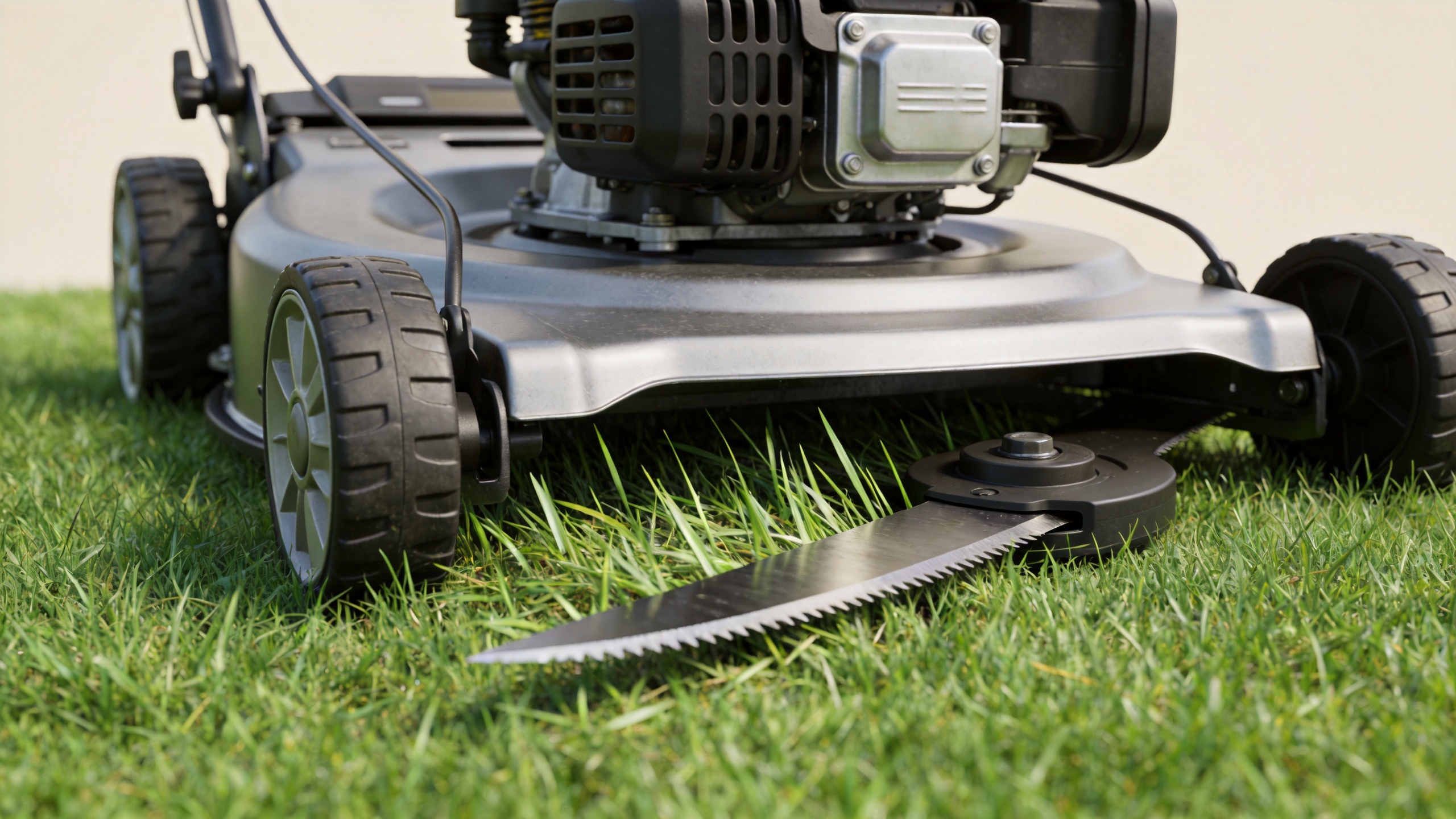
Inspect for deep nicks, cracks, bends, missing lift sections, and excessive thinning near the edge. Sharpening fixes a dull edge; it does not repair structural damage. Replace a damaged mower blade rather than trying to restore it. This is a safety decision as well as a cut-quality decision.
Balance and alignment keep the lawn mower cutting evenly
Every time material is removed during sharpening, balance should be checked. An unbalanced mower blade can create vibration through the handle or operator platform. In addition to being uncomfortable, vibration can make the cut less consistent and place extra stress on mounting hardware and the mower. Remove similar amounts from both ends, then use a suitable balancer before reinstalling the blade.
Also check the blade mounting hardware and, where applicable, the deck level. A sharp blade on a loose mount or an uneven deck will not create a level cut. If one side of the grass is consistently taller after mowing, stop treating sharpness as the only suspect: inspect tire pressure, deck adjustment, spindle condition, and blade seating as well.
Common cut-quality symptoms and likely blade causes
| What you see | Likely cause | First check |
|---|---|---|
| Frayed or brown grass tips | Dull or nicked cutting edge | Inspect edge condition and sharpen or replace as needed |
| Uneven strips of grass | Bent blade, deck issue, or blade mounted incorrectly | Check blade straightness, mounting, tire pressure, and deck level |
| Clumps left behind | Deck buildup, wet grass, or unsuitable airflow profile | Clean the deck and mow only when conditions allow |
| Strong new vibration | Blade imbalance, damage, or loose hardware | Stop the lawn mower and inspect before continuing |
| Missed grass on a second pass | Slow blade speed, deck blockage, or overly tall/wet grass | Clear debris, reduce travel speed, and avoid removing too much at once |
A practical blade-care routine
- Make the mower safe first. Switch off the lawn mower, disconnect the power source or spark-plug lead as appropriate, and follow the manufacturer's service procedure.
- Clean before judging. Remove compacted grass from the deck and blade so you can see the real edge condition and any damage.
- Inspect the whole blade. Check the cutting edge, sail or lift area, center hole, and both ends for cracks, bends, and severe wear.
- Sharpen evenly. Preserve the original bevel and remove similar material from each end. Do not use sharpening to erase major damage.
- Balance and reinstall correctly. Confirm balance, use the correct orientation, and tighten hardware to the manufacturer's specification.
- Test the result on a small area. Look for a clean, even finish and listen for abnormal vibration before mowing the full lawn.
How often should this happen? It depends on mowing frequency, soil grit, hidden debris, grass type, and whether the lawn is usually dry or damp. Inspect the mower blade several times through the growing season. High-use equipment may need more frequent attention; Purdue Turf notes that some operating conditions can call for sharpening several times in a year. Let the lawn's finish and the blade inspection guide the schedule rather than waiting for a fixed calendar date.
Match mowing practice to the blade and conditions
Even a well-maintained lawn mower will struggle if it is asked to remove too much wet growth in one pass. Mow when the grass is reasonably dry, keep the deck clear, and avoid scalping. If grass has become tall, raise the cutting height and make more than one pass rather than forcing heavy clippings through the cutting system. For mulching, slower travel and a clean deck often matter as much as the blade itself.
Consider your usual grass care routine before choosing a replacement. Bagging, side discharge, and mulching can favor different blade profiles, but the approved options in the mower manual should set the boundary. Do not fit a blade simply because it looks similar or promises a more aggressive cut.
When sharpening is no longer the answer
Replace the mower blade when it is cracked, bent, badly corroded, worn thin, or has lost too much material to be safely balanced. Persistent vibration, a repeated uneven cut after routine maintenance, or damage from striking an object are reasons to stop and inspect rather than mow again. A new compatible blade can restore cut quality, but it cannot compensate for worn spindles, a clogged deck, or incorrect mowing technique.
Final takeaway
The lawn mower blade has a direct effect on how the lawn looks after every pass. A clean, balanced, correctly matched blade supports an even cut; a dull, damaged, or unsuitable one tears tips, disrupts airflow, and makes the cutting system work harder. Keep the deck clean, inspect the blade regularly, sharpen conservatively, and replace damaged parts. Those simple habits protect both cutting quality and the long-term condition of the lawn.
 Hot News