
 EN
How Does Cutting Deck Material Affect Cordless Lawn Mower Performance?
A cordless lawn mower is often compared by battery voltage, motor type, or drive system first. Those matter, but the cutting deck deserves the same attention. The deck is the shell around the blade and the passage that moves grass clippings toward the bag, mulch chamber, or discharge opening. Its material influences how the mower handles, how well the deck holds its shape, and how much upkeep it may need over time.
As a garden-equipment dealer, I have learned that a higher price does not automatically mean a better cut. A premium deck may bring corrosion resistance or a sturdier feel, but cutting efficiency still depends on the complete system: blade sharpness, deck geometry, motor output, battery charge, and the grass conditions on the day. This guide separates what mower deck material can change from what it cannot.
Why the Deck Matters on a Cordless Lawn Mower
On any mower, the blade creates airflow that lifts grass before cutting and carries clippings through the deck. A well-designed mower structure keeps the blade clearance and discharge path consistent. On a cordless lawn mower, a lighter or better-balanced deck can also make turning, lifting, storage, and transport less tiring. That is useful because battery packs already add concentrated weight near the motor or battery bay.
Material alone does not create suction or cutting power. The inside profile of the deck, blade design, grass moisture, travel speed, and bagging or mulching setting have a direct effect. Still, material affects stiffness, impact behavior, corrosion exposure, and overall mass. Those traits influence whether the mower maintains its intended geometry and remains pleasant to use across seasons.
The Main Mower Deck Material Options
Steel decks: solid feel and repair potential
Steel is common because it can be formed into a strong, rigid deck at a practical cost. On a cordless lawn mower, that rigidity can help the deck resist flexing when it crosses uneven ground or encounters routine vibration. A stable shell supports predictable blade clearance and can feel reassuring when you mow dense grass.
The tradeoff is corrosion. Wet clippings, fertilizer residue, and chipped paint can expose steel to rust if the underside is not cleaned and dried. Steel also tends to add weight. That extra mass may be welcome for a planted, durable lawn mower feel, but it can make a compact mower less convenient to carry up steps or hang for storage. If you choose steel, inspect the coating, clean the underside after damp mowing, and address paint damage before it spreads.
Aluminum decks: lower weight with corrosion resistance
Aluminum decks are often selected for a balance of lower weight and resistance to rust. One manufacturer, for example, describes its one-piece aluminum decks as a route to torsional rigidity and longer service life. That is a useful design goal, not a guarantee that every aluminum mower cuts better than every steel one. The thickness, reinforcement, deck shape, and assembly quality still matter.
For the user, reduced deck weight can improve maneuverability and make the cordless lawn mower easier to lift. Aluminum does not rust in the same way as unprotected steel, which helps in humid storage conditions. However, it can be more costly and may react differently to a hard impact. Inspect for dents or cracks after striking a solid object, and do not confuse corrosion resistance with immunity from damage.
Polymer or composite decks: light, quiet, and corrosion-free
Polymer and composite decks can make a cordless lawn mower notably easy to push and store. They do not rust, and their molded form can support smooth internal contours. Some manufacturers market composite decks for dent and corrosion resistance, but those claims are model-specific and should be checked in the relevant product documentation.
A good composite deck is not simply “plastic.” Its ribbing, wall thickness, attachment points, and temperature tolerance determine how it performs. In normal domestic mowing, a quality molded deck can be a sensible choice for a small or medium lawn. For routinely rough ground, repeated impacts, or heavy commercial-style use, look beyond the material label and inspect the reinforcement around the wheels, handle mounts, and blade housing.
How Material Connects to Cutting Efficiency
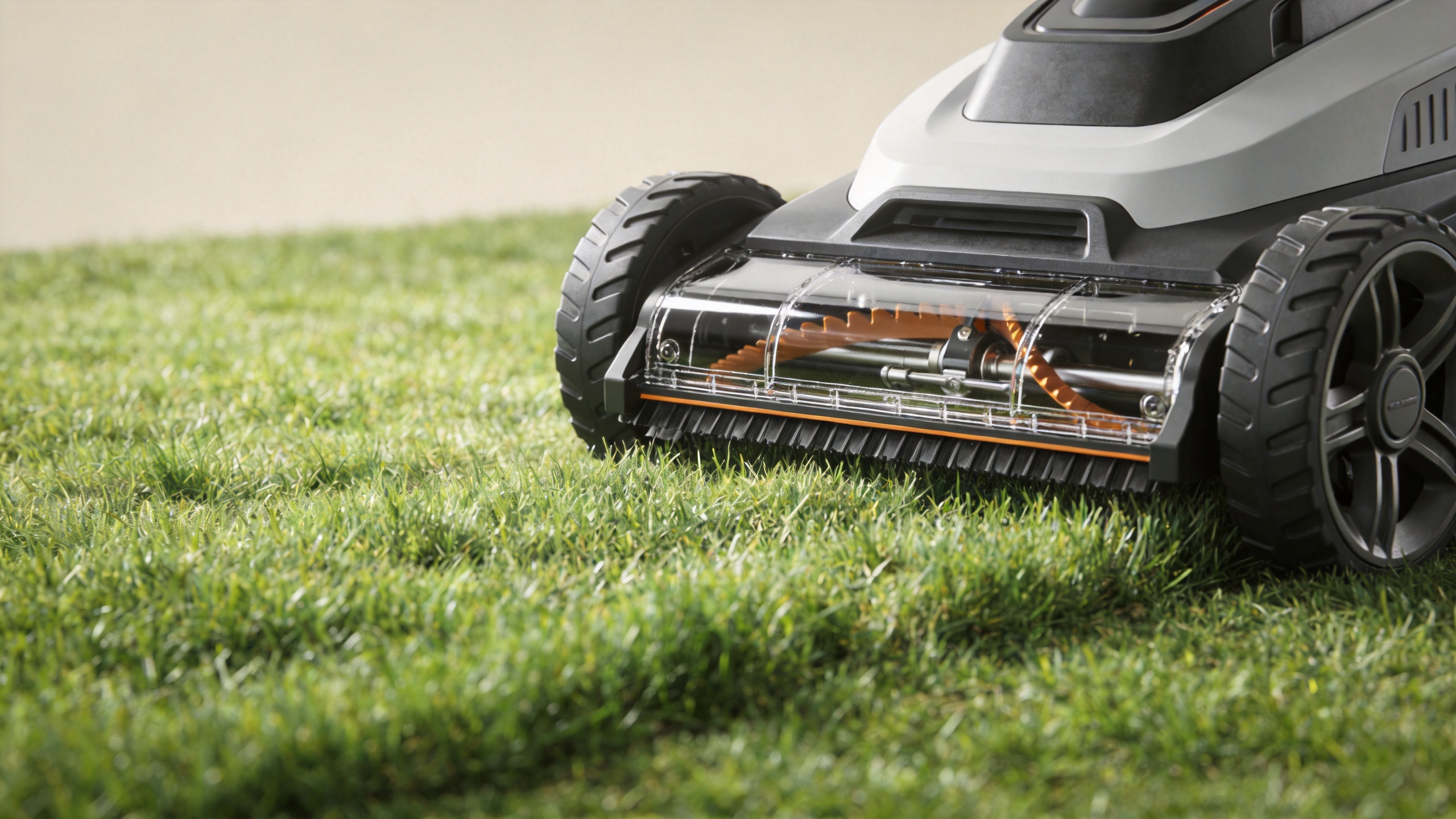
The most useful way to judge cutting efficiency is to treat deck material as an indirect contributor. A rigid, undamaged deck can preserve the clearance and airflow path intended by its designer. A badly bent, cracked, clogged, or loose deck can disrupt clipping flow regardless of whether it is steel, aluminum, or composite.
- Airflow and clipping movement: The deck’s inner shape and cleanliness determine how freely clippings circulate. Packed wet grass reduces lift and can leave an uneven finish.
- Blade clearance: A deck that stays structurally sound helps keep the blade in its designed operating space. Material is only one part of that result; brackets and fasteners matter too.
- Ground following: Deck weight and the wider mower structure affect how easily you guide the machine around edges and undulations. A lighter deck can reduce fatigue, while a heavier one may feel steadier.
- Condition over time: Rust, impact damage, and neglected cleaning can change the deck long before the motor or battery shows a problem.
Here is the caveat many buyers miss: a sharp blade and an appropriate walking pace usually have a more immediate effect on finish quality than switching from one deck material to another. If your mower tears grass tips, first check blade condition, charge level, cutting height, and whether the lawn is excessively wet.
Deck Material and Battery Runtime: A Smaller, Practical Link
Deck material does not change the battery chemistry or motor rating. It can, however, affect the effort required to move the mower. A lighter mower may be easier to maneuver, especially on a flat lawn or when turning frequently. That may help the operator maintain a smooth pace, but it should not be treated as a certain runtime increase.
For a self-propelled cordless lawn mower, the drive motor, slope, grass height, traction, and travel speed will generally dominate energy use. For a push model, a lighter mower structure can feel more responsive. The appeal of cordless freedom is real—no fuel mixing or cable management—but runtime is still a working limit. Ask yourself one direct question: can your mower complete your usual cut on the supplied batteries under your typical grass conditions?
Choose by Your Lawn, Not by the Label Alone
Use the material as one decision criterion rather than the final verdict:
| Typical priority | Deck traits to inspect | Practical question |
|---|---|---|
| Easy lifting and storage | Lower overall weight; reinforced handle and wheel mounts | Can one person carry and store the mower comfortably? |
| Damp climate or outdoor storage risk | Corrosion-resistant material or durable coating; drainage and cleaning access | Will you clean and dry the deck after mowing? |
| Uneven ground | Rigid shell, secure wheels, strong height-adjustment hardware | Does the whole mower structure feel stable across your lawn? |
| Frequent mulching | Smooth underside, suitable blade, easy cleaning access | Can you clear clippings before buildup affects airflow? |
| Long-term ownership | Service access, replacement parts, clear care instructions | Can you inspect the deck and maintain it each season? |
A Simple Inspection Checklist Before You Buy
- Look under the deck. Check for smooth clipping paths, drain or cleaning access, and no obvious weak areas around mounts.
- Compare the mower’s total weight, not the deck material in isolation. Battery placement can change the balance dramatically.
- Check the blade, cutting-height system, and wheel attachments. These parts work with the deck to determine the real cutting result.
- Read the care instructions. A durable lawn mower is one whose underside you can clean and whose consumable parts you can replace.
- Match the mower to your lawn’s grass density, moisture, slope, and area. No mower deck material compensates for an undersized battery system or the wrong cutting routine.
Bottom Line
Mower deck material affects a cordless lawn mower through weight, corrosion behavior, impact resistance, and its ability to preserve the deck’s intended shape. Steel can offer a robust, repairable feel but needs corrosion care. Aluminum can balance lower weight with rust resistance. Polymer or composite can reduce weight and eliminate rust concerns when the design is well reinforced.
None of those choices automatically delivers a superior cut in every setting. For reliable cutting efficiency, evaluate the full mower structure: deck design, blade condition, motor and battery system, wheel hardware, and how the machine suits your lawn. That approach produces a better buying decision than treating material as a standalone performance score.
 Hot News