
 EN
How to Compare Different Cordless Lawn Mower Battery Systems?
Choosing a cordless lawn mower is partly a mowing-deck decision, but it is also a battery-platform decision. A pack that looks larger on the shelf may not give more usable work time, and a high voltage label does not tell the whole story. As a garden-machinery technical consultant, I start with the lawn, the expected mowing session, and the tools a buyer may add later. That approach makes a battery comparison much more useful than comparing a single headline number.
For any cordless lawn mower, compare the pack, charger, motor controls, and compatible tools as one system. A small, dry lawn cut regularly creates a different load from tall spring lawn, damp clippings, or a large property with interrupted sessions. The right choice depends on that workload.
Start with stored energy, not voltage alone
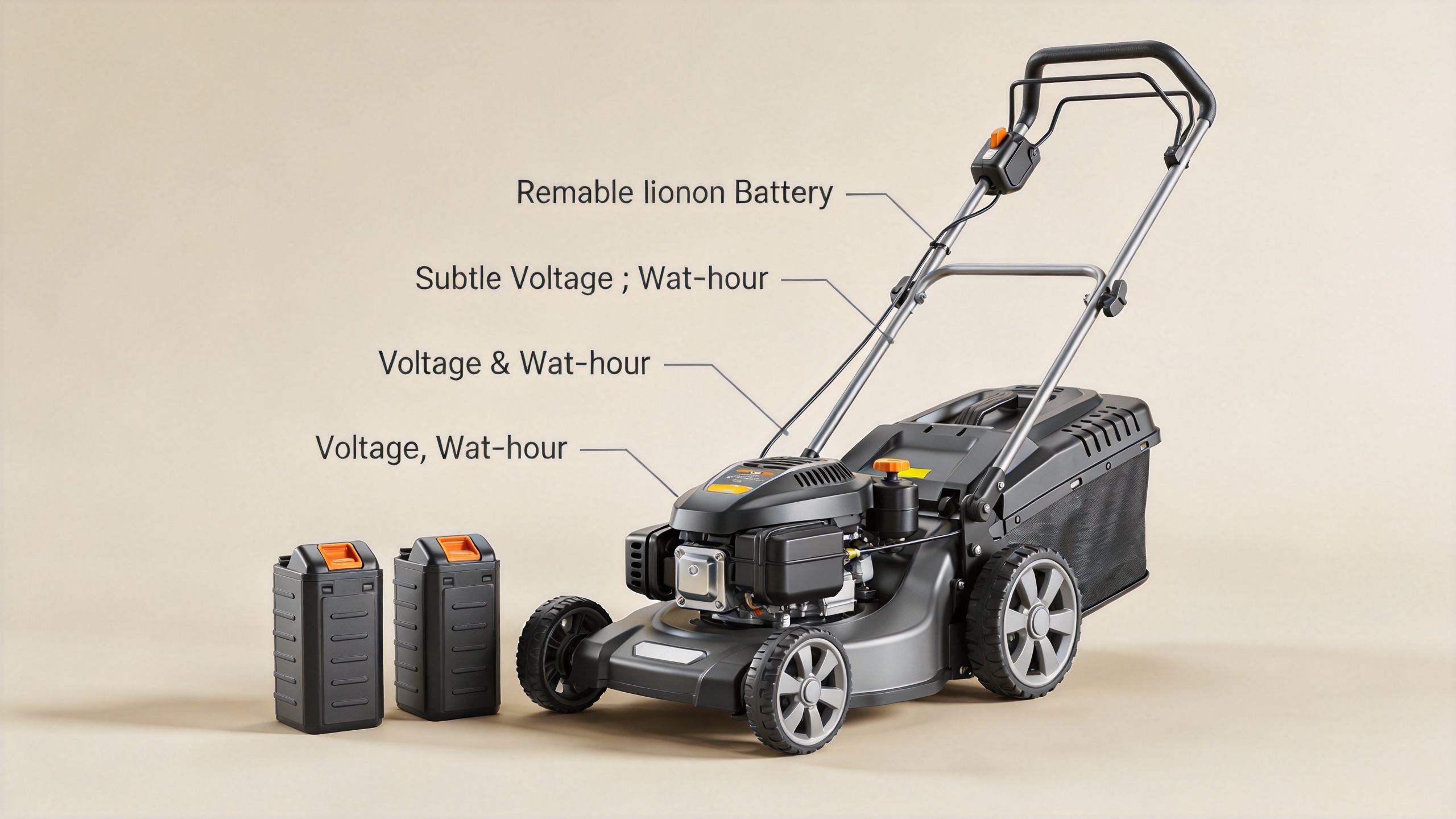
Voltage and amp-hours are both relevant, yet neither should be read in isolation. Voltage is part of the electrical system design; amp-hours describe charge capacity. To make a rough cross-platform comparison, multiply nominal volts by amp-hours to estimate watt-hours. For example, a 36 V, 4 Ah pack is approximately 144 Wh, while a 48 V, 3 Ah pack is also approximately 144 Wh. This does not mean the two systems deliver identical performance, but it gives a common starting point.
A cordless lawn mower may use one battery, two batteries at once, or two packs in sequence. Check which arrangement is supplied with the machine and which is optional. A dual-battery bay can reduce stops during a longer session, but it does not automatically mean both packs power the blade at the same time. The manual and product specification should state how the system works.
Use this battery comparison table
| Question | What to compare | Why it matters |
|---|---|---|
| How much energy is available? | Nominal voltage, Ah, and estimated Wh | Wh provides a more even basis for a battery comparison across voltages. |
| What must the battery do? | Blade load, drive motor, lights, or other functions | A self-propelled cordless lawn mower may draw energy differently from a push model. |
| How long is charging? | Charger output, pack size, and included charger | Charging time affects how many batteries a user needs for a workday. |
| Where else does the pack fit? | Current and planned compatible tools | A shared platform can simplify storage, purchasing, and spare-pack planning. |
| How is the system supported? | Battery availability, instructions, service process | A battery platform remains useful only if replacement packs can be sourced when needed. |
What lithium technology changes—and what it does not
Most current battery-powered garden tools use rechargeable lithium-ion packs. In practical use, lithium technology allows a pack to store useful energy in a compact form, but it does not remove the need to match capacity to work. Battery electronics, cell arrangement, thermal management, and the mower’s control strategy all influence how a cordless lawn mower behaves under load.
Pay attention to the information that accompanies the pack. A clearly identified battery, approved charger, readable operating instructions, and stated storage guidance are more useful than a vague runtime claim. General battery-safety guidance also supports using the supplied or approved charger, inspecting packs for damage, and following the equipment maker’s directions. Do not charge a damaged pack or use a battery that has been modified.
Translate runtime claims into your mowing conditions
Runtime is not a fixed property of a cordless lawn mower. Taller lawn requires more cutting effort. Wet lawn can increase resistance and encourage clumping. A dull blade tears rather than slices efficiently, and a self-propelled drive adds another energy demand. Even frequent stops to empty a collector alter the pace of a session. So, treat a stated runtime as a test condition, not a promise for every lawn.
For a more realistic battery comparison, estimate the area you mow in one session, note whether the lawn is usually dry, and record how often the mower slows in dense patches. Then compare that routine with the available pack energy and your charging window. If a typical session is near the claimed limit, a second compatible battery is usually more practical than expecting the first pack to stretch farther.
A cordless lawn mower also benefits from a clean deck and a sharpened blade. These maintenance steps are not battery upgrades, but they can help the tool maintain steadier cutting performance rather than forcing the system to work harder than necessary.
Compare the platform, not just the mower
An electric mower purchase can lead to future purchases of trimmers, blowers, hedge tools, or other outdoor equipment. That makes platform compatibility a cost and workflow question. Confirm the exact voltage family, physical battery connection, and any stated restrictions. Packs with similar voltage labels are not necessarily interchangeable, even when they appear to have a similar shape.
For dealers, fleet users, and homeowners with more than one tool, a shared platform can make battery rotation easier. However, the cordless lawn mower should still receive the capacity it needs. A compact pack that is convenient for a light trimmer may be too small for sustained mowing. Evaluate the mower’s supplied configuration first; platform breadth is a secondary advantage.
Charging workflow is part of performance
Look beyond the phrase “fast charger.” Ask how long the included charger takes with the included pack, whether a faster charger is optional, and whether the charger can be used on other packs in the same system. For a cordless lawn mower used on several properties, one charger and one battery may create a bottleneck even if each component works properly.
Plan storage for a dry, temperate location according to the manufacturer’s instructions. Before seasonal storage, clean the pack terminals only as directed, avoid loose metal objects near the contacts, and avoid leaving the battery in direct sun or a vehicle that becomes hot. These ordinary habits support the long-term performance of an electric mower battery system.
A practical decision sequence
- Measure the usual mowing area and identify demanding conditions such as tall, wet, or uneven lawn.
- For each cordless lawn mower, list supplied packs, voltage, Ah, estimated Wh, and the included charger.
- Decide whether the intended runtime leaves a comfortable margin for your actual lawn.
- Check the exact compatible-tool family and the availability of approved spare batteries.
- Read the battery, charging, storage, and service instructions before selecting the system.
Make the comparison fit the work
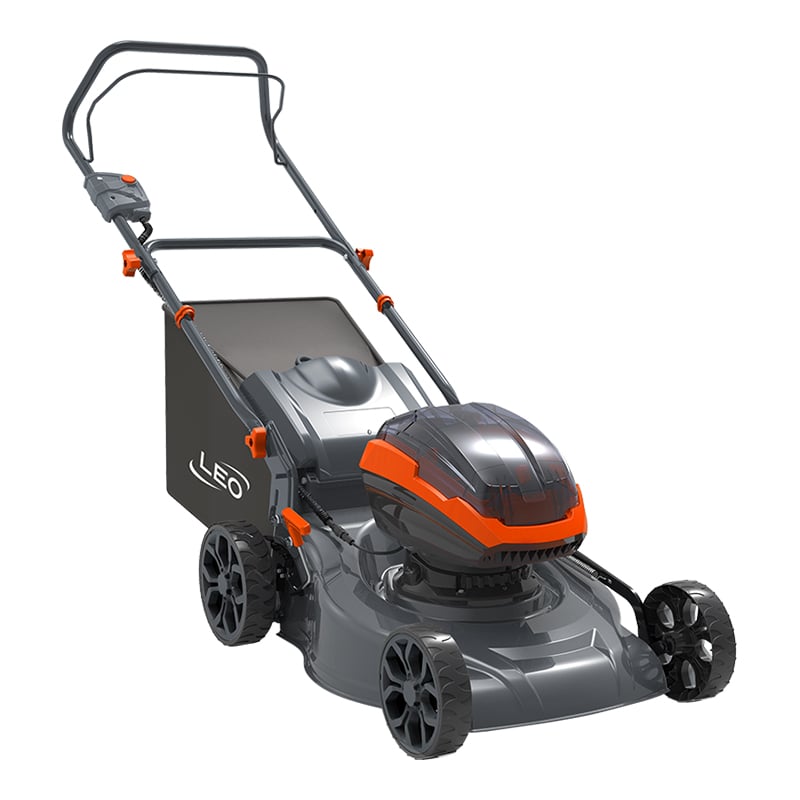
A cordless lawn mower battery system should be evaluated as a working arrangement, not as a single number. Start with watt-hours, then assess cutting conditions, charging rhythm, and genuine platform compatibility. That method keeps the battery comparison grounded in practical use and helps buyers choose a system whose lithium technology, capacity, and electric mower workflow fit the lawn they actually maintain.
 Hot News