EN
What Should Distributors Know Before Importing Ride On Mowers?
Importing a ride on mower is not simply a matter of comparing a factory quotation with a retail target price. For a distributor, each unit carries a long chain of commitments: product safety, destination-market paperwork, carton integrity, seasonal arrival, spare-parts support, and the reputation of the brand on the side panel. A low unit price can lose its appeal quickly if the delivered machine, documents, or service plan do not match the agreement.
This distributor guide takes a procurement-first view. Before placing a container order, ask whether the proposed ride on mower range fits the market, whether the supplier can document what it is supplying, and whether your team can support the machines after the first selling season.
Start with the market you plan to serve
A ride on mower assortment should start with customer use cases, not a generic catalogue. Map the plots, terrain, lawn conditions, storage constraints, and operator expectations in your territory. A machine chosen without checking terrain suitability can create avoidable returns and safety conversations. For example, do not accept a broad statement about slope capability; ask for the exact model guidance, operating limits, manuals, and evidence that applies to the configuration you intend to import.
Also decide where the range will sit in your portfolio. Will it serve residential estates, grounds-care contractors, rental fleets, or mixed retail channels? Those routes shape the expected deck options, collection arrangements, replacement-part demand, packaging, and warranty process. The answer is context-dependent, so sales forecasts should be tied to a defined customer profile rather than a headline specification.
Turn compliance into a document checklist
When importing equipment, paperwork is part of the product. In the EU and EEA, CE-marked products are subject to applicable conformity requirements, and machinery documentation can include a declaration of conformity plus safety information and instructions. Requirements change by destination, product type, and timing, so this is a commercial checklist rather than legal advice: have your compliance team or local adviser validate the current requirements before approving production.
- Request the model-specific declaration of conformity and confirm that the model, manufacturer identity, and relevant product description are consistent across documents.
- Review the intended language versions of manuals, warning labels, and safety information for every sales market.
- Confirm the nameplate, serial-number method, traceability records, and carton markings before artwork is released.
- Clarify who retains the technical file, who answers regulator enquiries, and how revisions are communicated if a component or label changes.
- Check tariff classification, shipping documents, and destination-market packaging obligations with the parties responsible for customs and compliance.
Do not let document review wait until loading day. A discrepancy between a sample, a production unit, and the declaration may take longer to resolve than a cosmetic defect.

Qualify the OEM supplier beyond the quotation
An OEM supplier should be assessed as a process partner, not only as a source of machines. Ask what can be customized and what remains controlled by the base platform: branding, manuals, carton design, accessory packs, labels, order mix, and configuration. Then put the agreed version under change control. If a substitution requires written approval, state that in the purchase order and inspection plan.
For a distributor launching a private-label ride on mower, consistency across batches matters as much as the first sample. Request a clear escalation route for specification questions, nonconformities, and warranty evidence. Ask how the factory records serial numbers, handles corrective action, and communicates changes to purchased components. An answer that is specific to the order is more useful than a broad assurance.
Build a quality check that tests the delivered order
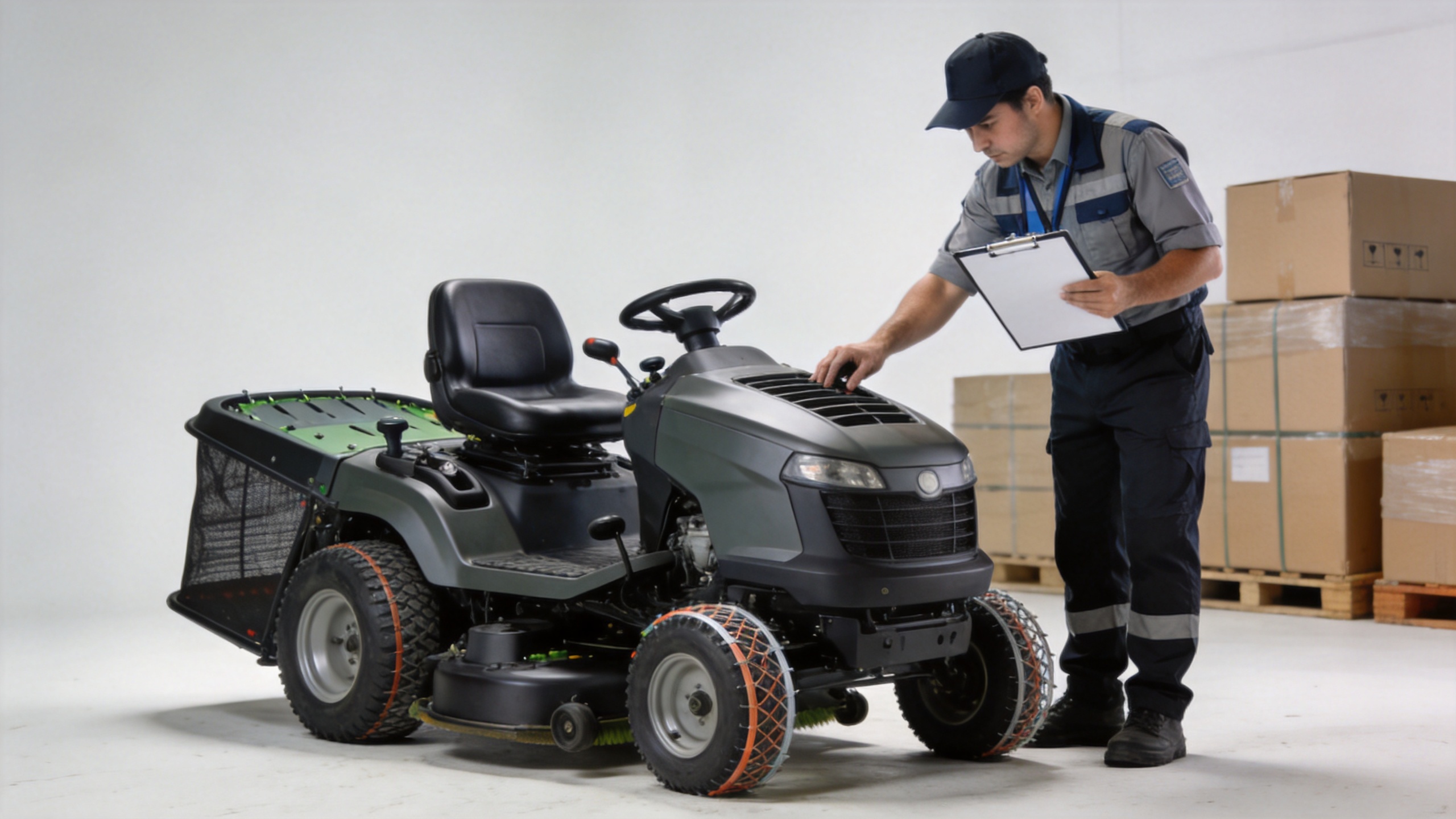
A sample approval is useful, but it does not replace a pre-shipment quality check. Your plan should verify the actual finished order against an approved specification sheet. Independent inspection can be appropriate where the commercial exposure justifies it; agree the timing, sampling approach, access, acceptance criteria, and who approves a deviation before production begins.
- Identity: Match model, configuration, labels, accessories, manuals, and carton artwork to the approved order.
- Function: Define the permitted functional checks for the ride on mower, with records or media where appropriate.
- Finish and assembly: Inspect visible fit, fasteners, guards, controls, and any agreed workmanship standards.
- Documents: Verify that the agreed declarations, instructions, parts lists, and shipment papers are present and current.
- Packaging and loading: Check carton protection, quantity, pallet or container arrangement, and loading evidence against the agreed packing plan.
Write the pass/fail criteria before the inspection. If the supplier proposes a remedy, record the correction, re-check scope, and release decision. That discipline gives the importer a usable audit trail instead of an informal email chain.
Plan after-sales support before the first container departs
A ride on mower is a serviceable machine, not a one-time carton sale. Determine which wear parts and service parts will be stocked locally, how parts are identified, expected replenishment routes, and the information technicians will receive. For long-term reliability, parts availability and serviceability deserve the same attention as headline engine or deck details.
Ask the OEM supplier for a structured parts catalogue, exploded views where available, repair guidance, training material, warranty workflow, and a contact path for technical escalation. Your commercial team should also understand the limits of the warranty promise made to dealers and end users. In practical terms, a service case needs a serial number, evidence, diagnosis, authorization rules, and an agreed response route.
Protect timing, landed cost, and launch readiness
Seasonality turns a late shipment into a merchandising problem. Build backward from the retail window: production completion, inspection, rework allowance, booking, transit, customs clearance, warehouse intake, dealer allocation, and campaign assets. The first container is often where assumptions about lead time, carton dimensions, and document handoffs become visible.
For importing equipment, calculate landed cost using more than the ex-works or FOB figure. Include freight, insurance, duties and taxes where applicable, port and handling charges, testing or inspection, local labeling, warehousing, parts inventory, warranty reserve, and the cost of delayed launch. Revisit the model when the order mix or destination changes.
A practical release gate for distributors
Before authorizing shipment, convene purchasing, compliance, quality, logistics, service, and sales around one release file. It should show the approved ride on mower configuration, document status, inspection result, packing evidence, shipment details, spare-parts plan, and unresolved issues with named owners. If one item is pending, decide explicitly whether it blocks release or has an approved corrective path.
The central lesson is straightforward: a durable import program is built by verifying the agreement at each handoff. Select the range for a real market, validate the compliance package locally, run a documented quality check, and make after-sales readiness part of the order—not an afterthought once the machines arrive.

 Hot News