
 EN
Why Is Noise Reduction Important in Modern Garden Shredders?
A garden shredder turns pruning waste, leaves, and smaller clippings into material that is easier to compost, move, or reuse as mulch. Yet the value of a garden shredder is not measured only by throughput. In residential areas, the sound a machine makes affects when people feel comfortable using it, how long they can work, and whether a seasonal clean-up becomes a point of friction with neighbours. That is why noise reduction has become a practical design and buying consideration rather than a cosmetic extra.
As a garden-machinery technical consultant, I would start with a simple distinction: quieter does not mean weak, and a high-power rating does not automatically mean a better fit. The useful question is whether a garden shredder can process the expected material at a sound level, pace, and feed method that suits the site. A balanced choice considers silent operation, the type of waste, the working window, and the operator’s comfort.
Noise control changes when a garden shredder can be used
Most home shredding happens after pruning, hedge trimming, or autumn clearance. Those jobs often need to be fitted around work, school, weather, and shared living spaces. A loud garden shredder may still process waste effectively, but it can narrow the hours in which a homeowner feels able to use it. Better noise control can make an early-evening or weekend maintenance session feel more manageable, especially in compact suburban gardens.
This matters because sound travels differently in an open yard, a walled courtyard, and a densely planted garden. Hard boundaries can reflect noise; a narrow gap between homes can make it seem more intrusive. The goal is not to promise silence—shredding branches is inherently mechanical—but to reduce the unnecessary acoustic burden created by motor noise, vibration, and harsh cutting impacts.
European outdoor-equipment rules address noise measurement and labelling for relevant categories of machinery. Buyers should therefore look beyond a broad “quiet” claim and review the sound information, product documentation, and local requirements that apply to the specific model and market. Comparing like-for-like figures is more useful than comparing marketing language alone.
Why lower noise improves user comfort
User comfort is often discussed as a handle or wheel issue, but hearing fatigue is part of it too. With a loud garden shredder, the operator may rush feeding, shorten the task, or avoid a job until waste has accumulated. That can make the work less pleasant and can encourage poor habits such as overloading the hopper. A calmer operating character helps the user focus on safe feeding, material sorting, and a steady workflow.
General occupational-safety guidance identifies prolonged noise exposure around or above 85 dBA as a hearing-risk concern. That reference is not a specification for any individual garden shredder, and domestic use varies greatly, but it is a useful reminder: wear hearing protection whenever the manual or the environment calls for it, keep children and bystanders clear of the work area, and limit exposure rather than assuming a quieter machine needs no precautions.
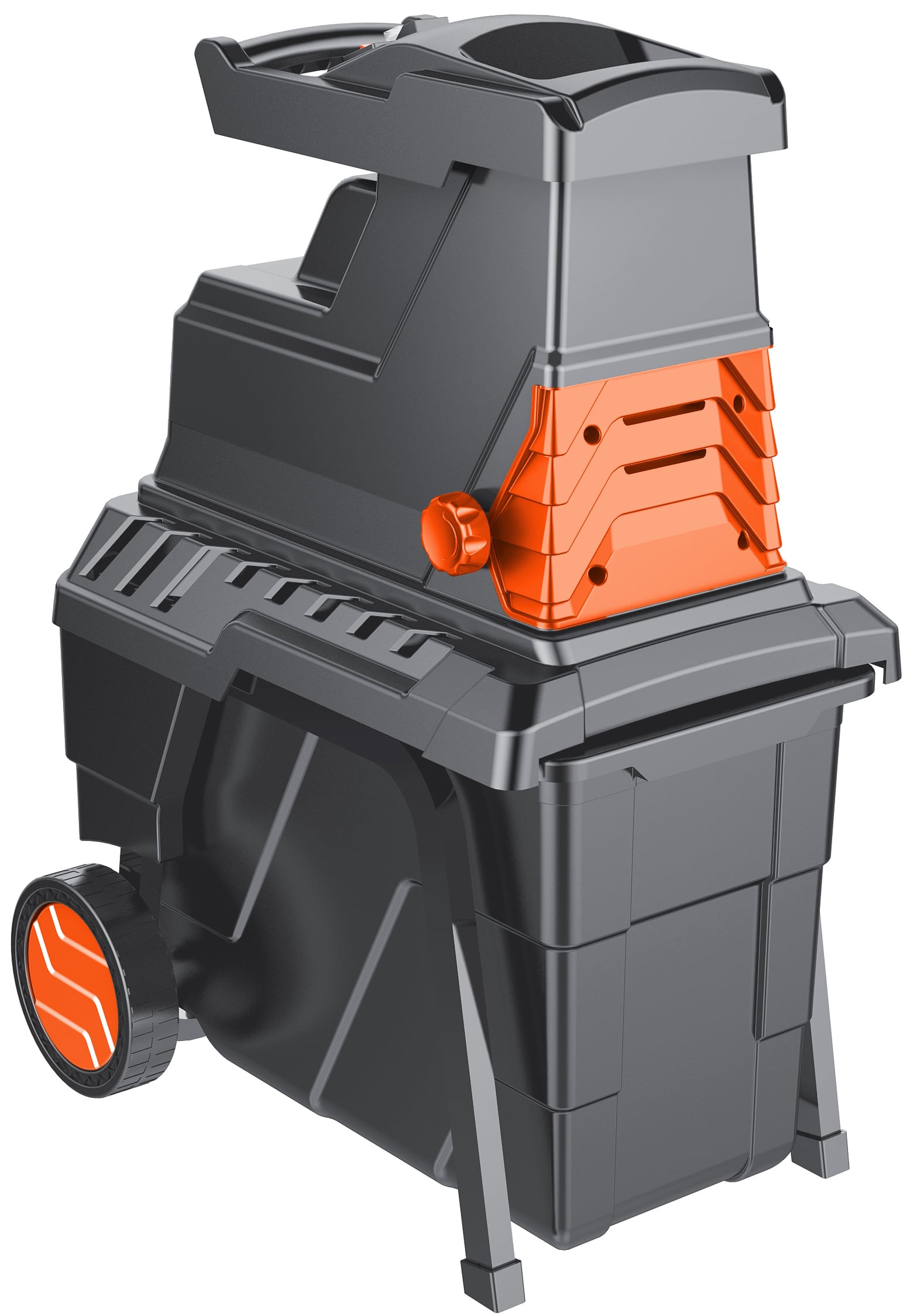 Noise-conscious garden shredding starts with suitable material, steady feeding, and safe working practice.
Noise reduction is part of responsible neighbourhood use
In a shared residential setting, sound has a social cost. A garden shredder can be useful for turning bulky waste into compost-ready material, but a machine that dominates the garden can discourage frequent, smaller clean-ups. That is counterproductive. Regular processing is often easier on the machine and easier for the gardener than one long, rushed session with a pile of mixed material.
Good noise control also helps distributors and retailers explain the difference between a machine intended for occasional domestic use and equipment suited to more demanding, isolated, or commercial sites. The right choice depends on the customer’s plot, distance to neighbouring properties, material volume, and likely working hours. Noise should be discussed alongside branch-diameter capacity and cutting method, not after those decisions have been made.
Design choices that influence the sound experience
A modern garden shredder may reduce perceived noise through motor design, load management, housing, cutting-system geometry, and vibration control. The exact result depends on the model, the material, and maintenance condition. A worn cutting component, loose fastener, or unsuitable feedstock can make any garden shredder sound harsher than expected.
- Cutting system: Roller-style systems and blade systems handle material differently. Match the system to typical branches, stems, and leafy waste rather than selecting on sound alone.
- Vibration management: A stable frame, secure fasteners, and level placement can reduce rattling that adds to perceived noise.
- Feed discipline: Feed dry, suitable material at a measured rate. Forcing wet, fibrous, or oversize waste can cause jams and sudden changes in sound.
- Maintenance: Follow the manual for cleaning and inspection. A clean, correctly maintained garden shredder is more likely to work predictably.
Quiet operation should not override material matching
There is a trade-off worth stating plainly. Someone choosing a garden shredder only for silent operation may be disappointed if the machine is asked to process material outside its rated use. Search results commonly distinguish chipping woody branches from shredding softer green waste and leaves; that distinction matters. A household with mostly hedge trimmings has different needs from one that regularly prunes woody shrubs.
Before buying, make a short list of what will actually enter the hopper: approximate branch thickness, moisture level, volume per session, and whether the output is intended for compost or surface mulch. Then compare a garden shredder on documented capacity, reverse or anti-jam functions where provided, sound information, and service support. This is more dependable than treating any one feature as the whole answer.
A practical noise-conscious checklist
- Check the stated sound information for the exact garden shredder, not a related model.
- Think about the nearest home, fence line, and likely hours of use.
- Match the cutting system and rated material capacity to real garden waste.
- Plan hearing protection and safe working practice even when noise control is a priority.
- Keep the machine maintained, stable, and free of unsuitable material.
Conclusion
Noise reduction matters because it connects performance with everyday usability. A well-matched garden shredder gives the owner a more comfortable way to manage organic waste, encourages considerate use around neighbours, and helps the operator stay focused on safe working habits. For homeowners and buyers of garden tools, the sensible approach is to compare sound information with capacity, feedstock compatibility, and maintenance needs. In other words, choose a garden shredder that fits both the garden and the people living around it.
 Hot News