
 EN
Future Trends of Electric Cultivation Equipment for Garden Applications.
Garden cultivation is moving toward quieter, more connected tools, but the useful changes will not arrive as a single dramatic leap. For people planning beds, refreshing borders, or preparing compact vegetable plots, the central question is how an electric tiller will become easier to match with real soil, real schedules, and real storage space. As a garden-machinery technical consultant, I would start with the worksite rather than a feature list: soil condition, area to be cultivated, access to power, and the number of passes the ground needs each season.
The next generation of an electric tiller is likely to be shaped by three linked developments: more capable battery technology, practical smart gardening functions, and a wider expectation that sustainable equipment should be repairable and used thoughtfully. None of those trends removes the need for torque, tine design, and sensible operation. They do, however, change what buyers should ask before choosing an electric tiller.
Why the electric tiller category is changing
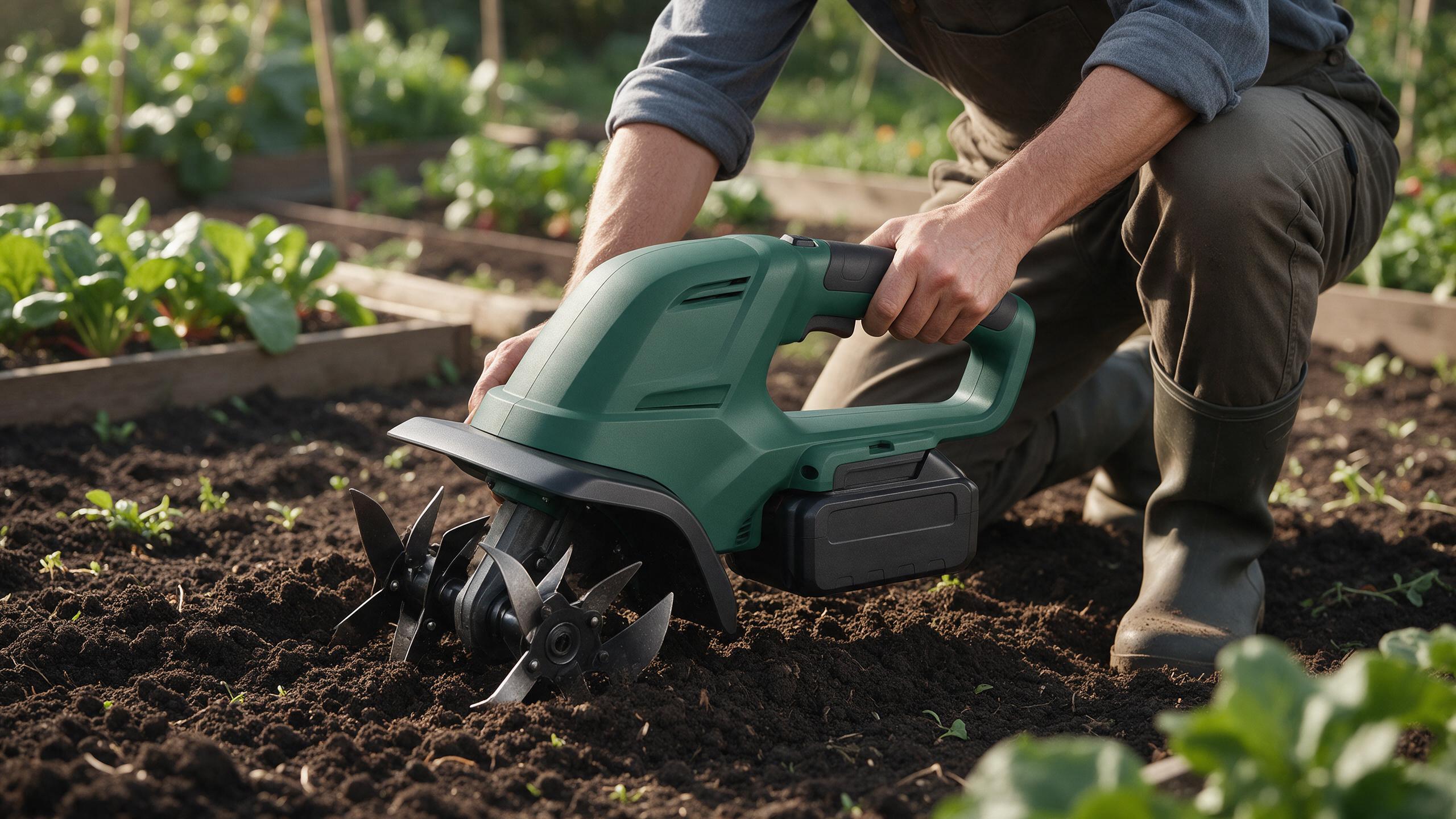
Current search results show shoppers comparing corded, battery-powered, and gas-powered cultivators while looking closely at working width, motor output, adjustable depth, and hard-soil suitability. That reflects a useful reality: an electric tiller is not one category with one ideal user. A corded unit can suit a small plot near an outlet; a cordless model can make sense where a cable would complicate turns around raised beds or trees. A larger or compacted site may still require a different power format or a staged cultivation plan.
Future electric tiller design will likely focus less on simply adding power and more on making available power predictable. That means clearer load management, better feedback when tines encounter dense soil, and controls that help an operator avoid overworking a small machine. It also means design choices that make a tool easier to move, clean, store, and service between seasons.
Battery technology will be judged by usable work, not a headline rating
Battery technology is central to the cordless electric tiller, yet a battery label alone cannot describe a day in the garden. Runtime changes with soil moisture, compaction, cultivation depth, temperature, tine resistance, and how often the operator pauses or repositions the machine. A light pass through prepared soil asks less of an electric tiller than opening a neglected bed with roots and clods. That distinction matters more than a broad promise about how long a battery should last.
The next useful step is a battery system that communicates remaining capacity in a context the user can act on. Instead of a simple bar icon, an electric tiller may indicate that the present workload is heavy, suggest a shallower first pass, or estimate whether the remaining charge suits the next garden section. This is smart gardening at its most practical: not automation for its own sake, but information that supports a better decision.
Interchangeable battery platforms may also influence buying decisions. Where compatible garden tools share chargers and batteries, a household can plan work across trimming, mowing, edging, and cultivation. Still, compatibility should be verified from current documentation rather than assumed. A future-ready electric tiller should be assessed alongside charging time, battery availability, storage guidance, and the local service path for replacement parts.
Winter storage will remain important
Better cells do not remove basic care. Owners of a cordless electric tiller will still need to follow the maker's charging and storage instructions, keep batteries dry, and avoid treating seasonal storage as an afterthought. A battery left in an unsuitable environment can undermine the convenience buyers expected from battery technology. That is a useful reminder that innovation works as a system, not as an isolated component.
Smart gardening features should solve small, repeatable problems
Smart gardening is often described with ambitious language, but the near-term value for an electric tiller is likely to be modest and concrete. A simple app or onboard display could store maintenance reminders, record working hours, flag a blocked cooling path, or help an owner plan charging before a weekend task. These features do not make soil preparation automatic. They can make routine ownership less opaque.
For example, a connected electric tiller could log repeated overload events. That history may show that the tool is being asked to work beyond its intended conditions, or that the operator would benefit from shorter passes after rain. It depends on whether the system explains the signal clearly; a notification that does not translate into action merely adds noise. The more credible use of smart gardening is therefore guidance, diagnostics, and maintenance planning rather than a claim of hands-off cultivation.
- Load feedback: alerts that encourage the operator to reduce depth or slow the pass when resistance rises.
- Maintenance prompts: reminders to inspect tines, fasteners, vents, and battery contacts after a defined period of use.
- Season planning: simple records that help households estimate charging needs and prepare a garden bed in stages.
What sustainable equipment means in practice
An electric tiller can reduce local exhaust during operation and may offer a quieter working experience than some combustion alternatives. That does not make every electric choice automatically sustainable equipment. Electricity generation, battery manufacturing, shipping, durability, repairability, and end-of-life handling all affect the wider picture. A more careful approach is to ask whether the electric tiller is appropriately sized, likely to be maintained, and supported with usable parts over time.
Designers may increasingly focus on service access: replaceable tines, clear fastener layouts, protected cable routing, and components that can be inspected without discarding the whole tool. For buyers, sustainable equipment also means avoiding an oversized electric tiller for a small, lightly worked bed. A tool that fits the workload can use energy more sensibly and may be easier to control around established plants.
The garden-use checklist for future equipment
Before choosing an electric tiller, match the technology to the garden rather than purchasing around a single trend. Ask these questions:
- How large is the area, and how many cultivation sessions are needed in a typical season?
- Is the soil already managed, or does it contain compaction, roots, stones, or dense clay that will increase resistance?
- Would a cable be manageable, or does the site make a cordless electric tiller more practical?
- Can the household charge and store batteries according to the manufacturer’s instructions?
- Are replacement tines, batteries, and service support realistically available where the equipment will be used?
This checklist helps separate useful innovation from novelty. An electric tiller with a connected display may add value for a busy gardener who wants maintenance visibility, while a simpler model may suit a small, predictable bed. Likewise, a larger battery may not be the right answer if the machine becomes harder to maneuver or the garden needs only brief, occasional use.
Where innovation may go next
Over the next product cycles, expect more attention to efficient motors, battery-management software, lower-vibration handles, modular accessories, and clearer operating feedback. The most meaningful innovation will be the kind that makes an electric tiller easier to size correctly and easier to keep working through several seasons. Fully autonomous cultivation may attract attention, but it faces practical limits: gardens are irregular, soil changes quickly, and an operator still needs to protect plants, irrigation lines, and boundaries.
The future is therefore likely to be incremental. A well-designed electric tiller will combine adequate digging capability with transparent battery information, sensible safety controls, and support for routine care. For gardeners, the opportunity is not to chase every new feature. It is to choose equipment whose battery technology, smart gardening functions, and sustainable equipment priorities match the actual work waiting outside.
Final perspective
Electric cultivation equipment is becoming more capable, but good garden preparation will remain site-specific. Use future trends as a filter: compare usable work rather than headline claims, look for smart gardening features that simplify a real task, and examine whether sustainable equipment is designed to be maintained. With that approach, an electric tiller becomes a practical part of a long-term garden routine rather than a short-lived experiment in innovation.


 Hot News