
 EN
How Does Lawn Mower Weight Affect Operation Comfort and Efficiency?
A lawn mower’s weight changes far more than the effort required to lift it from storage. It affects how easily you turn around beds, how steadily the deck tracks across uneven turf, how tired your hands and shoulders feel after a longer cut, and how confidently you can move the machine between work areas. As a garden-machinery technical consultant, I suggest treating weight as part of a system: the lawn mower, the terrain, the cutting task, and the person operating it all matter.
That is why a lighter lawn mower is not automatically the right answer, and a heavier one is not automatically more capable. Good mower design balances mass with wheel placement, handle shape, drive assistance, cutting width, and the job the machine is expected to do. The useful question is not “Which weight is right?” but “Where will this lawn mower spend most of its working time?”
Why lawn mower weight changes the feel of every pass
Weight becomes noticeable whenever the lawn mower changes direction, crosses an edge, encounters a bump, or needs to be parked. A light machine generally takes less force to pull from a shed, guide around a tree, or lift over a low threshold. That can improve user comfort for someone who mows a small, intricate garden and needs frequent turns.
However, mass can also make a lawn mower feel planted. On rough turf, a very light chassis may react more readily to ruts, roots, or a sudden tug from the collection bag. A somewhat heavier lawn mower can track more calmly when its wheels, deck, and handle geometry are designed well. The distinction matters: a stable feel comes from the whole mower design, not from weight alone.
Ask yourself how often you stop and reposition. If the answer is “constantly,” lightweight equipment may reduce the small bursts of effort that build up during operation. If the lawn is broad, open, and uneven, a little more mass may be easier to guide in a straight line than a machine that skips or deflects over every irregularity.
Comfort: pushing force, vibration, and control
For a push lawn mower, the practical comfort issue is not simply the number on a specification sheet. It is the force required at the handle while the blade is cutting, the collection bag is filling, and the wheels are rolling over real turf. Handle height, grip angle, wheel resistance, and deck cleanliness can change that experience as much as the base weight.
Vibration deserves attention as well. Guidance from occupational safety material notes that vibration from powered hand tools can add stress to the hands and arms. A lawn mower is not held in the same way as a small tool, but the underlying lesson still helps: on an extended session, a balanced handle, controlled vibration, and relaxed steering are important parts of user comfort. A lighter lawn mower that chatters across rough ground may be more tiring than expected; a heavier one with poor handle ergonomics can also become demanding.
Self-propelled operation changes the equation. Drive assistance can reduce the forward push needed for a heavier lawn mower, but it does not erase the effort of turning, reversing, loading, or working around narrow paths. When comparing models, try to separate travel effort from maneuvering effort. They are related, but they are not the same.
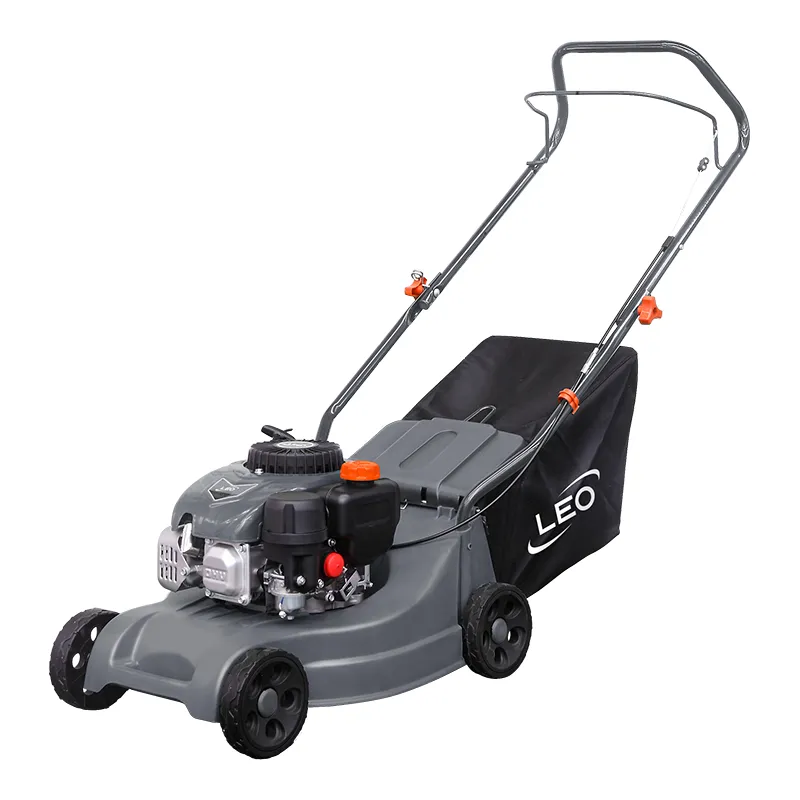 Weight, balance, and wheel placement all influence turning control.
Efficiency depends on the lawn, not only the machine
A lawn mower works efficiently when the operator can maintain a steady, comfortable pace and make clean, deliberate passes. On a flat, open lawn, a heavier walk-behind lawn mower may feel efficient because it stays composed and needs fewer steering corrections. On a garden divided by shrubs, paving, and tight corners, that same weight can slow operation because every turn, pivot, and repositioning movement takes more effort.
Cutting efficiency also depends on turf conditions, blade condition, deck design, and the chosen cutting height. Weight does not create cutting power by itself. In fact, a heavy lawn mower with a dull blade can still leave a poor finish, while a lighter model that suits the terrain and is maintained properly may be easier to operate consistently. This is the point many buyers miss: the most useful lawn mower is the one you can control without rushing or fighting it.
For wet or irregular ground, do not treat weight as a substitute for safe operating practice. Follow the manufacturer’s instructions for the machine and the site. Public safety guidance for push mowers also emphasizes working across a slope rather than up and down it, within the manufacturer’s recommended slope limits. A heavier lawn mower can increase the consequences of losing control, while a very light machine can be harder to keep on line. Either way, the manual and the conditions set the boundary.
How mower design changes the weight tradeoff
Two lawn mowers with similar weights can feel markedly different in use. Look at where the mass sits, not just how much there is. A low, centered layout often feels more predictable than weight concentrated at the front or high around the handle. Larger rear wheels may roll more easily over small obstacles, while a compact wheelbase may help in confined spaces. These are mower design choices that shape how a machine responds to your input.
- Wheel and deck layout: A well-balanced lawn mower is easier to steer without lifting or forcing one side.
- Handle adjustment: A handle that lets you stand upright can reduce awkward pushing and turning movements.
- Drive system: Assistance can help with long, open passes, but check how the lawn mower behaves when turning or backing up.
- Collection setup: A full collection box changes the balance of a lawn mower, so consider it part of the operating weight.
- Storage route: Stairs, shed lips, vehicle loading, and narrow openings can make lightweight equipment more practical.
Match lawn mower weight to your use case
Small lawns and tight layouts
For a smaller lawn with frequent obstacles, a lighter lawn mower often supports quicker turning and easier storage. It can make operation less intimidating for people who need to move the machine through openings or lift it over a small threshold. Still, test whether the lawn mower remains stable enough on the uneven spots you actually have.
Large, open lawns
A larger open area may justify a lawn mower with more mass, especially if a wider deck, stronger wheels, or a drive system make the work more controlled. Here, user comfort comes from steady tracking and lower steering correction rather than minimum lifting effort. Consider how the lawn mower feels late in the session, not just during the first few meters.
Slopes and irregular ground
On slopes or bumpy ground, choose a lawn mower according to the manufacturer’s terrain guidance first. Do not assume a heavy lawn mower will grip better in every condition, and do not assume lightweight equipment will be safer because it is easier to lift. Traction, wheel condition, surface moisture, and the direction of travel all influence operation.
A practical comparison routine before you choose
- Map the route from storage to lawn, including narrow entries, steps, and raised edges.
- List the terrain features that force turns: trees, borders, slopes, and narrow strips.
- Consider the heaviest normal configuration, including a filled collection bag or fitted battery.
- Check handle comfort and turning control, not only straight-line motion.
- Read the manufacturer guidance for slope use, maintenance, and safe operation before deciding.
There is no universally right lawn mower weight. If ease of transport and repeated turns are the priority, lightweight equipment may make operation more comfortable. If steady tracking over a larger or rougher area is the priority, a more substantial lawn mower may feel easier to manage. The useful choice comes from matching mower design to the layout, turf conditions, and person who will operate it.
 Hot News