
 EN
How to Build Long Term Cooperation with Garden Machinery Suppliers?
Finding a garden machinery supplier is straightforward. Building a working relationship that still performs after the first container, the first warranty claim, and the next season’s forecast is the harder task. For distributors, importers, and private-label buyers, long-term cooperation depends less on a persuasive quotation than on repeatable ways of sharing specifications, solving problems, and planning stock.
From a B2B procurement perspective, the useful question is not “Who offered the lowest unit price?” but “Which supplier relationship can support our market after delivery?” That distinction matters in a category where seasonal demand, parts availability, documentation, and product consistency all affect the cost of ownership.
Start with a supplier relationship built on shared operating facts
A new supplier relationship becomes fragile when both sides rely on assumptions. Before discussing volume commitments, document what each party needs to do: product scope, target market, expected launch window, quality criteria, packaging requirements, service responsibilities, and escalation contacts. Turn those points into a joint specification sheet rather than leaving them across emails and chat messages.
For garden machinery, include the details that frequently cause later friction: engine or battery platform, accessory configuration, spare-parts list, carton marking, manuals, inspection criteria, and the approved sample revision. A garden machinery supplier should be able to identify the latest revision and explain how production units are checked against it. If the first production batch differs from the approved sample, the commercial impact is usually far larger than a small saving on the purchase order.
It is sensible to define the evidence required for each market. For example, where CE marking applies, buyers should confirm who maintains the technical file, who issues the declaration of conformity, and how document revisions are controlled. For outdoor equipment, noise-related requirements may also shape the documentation and labelling needed for a target market. These are verification questions, not items to assume from a catalogue.
Qualify the garden machinery supplier beyond the quotation
Price remains relevant, but it is only one part of supplier qualification. A stronger evaluation compares the supplier’s process with your actual route to market. Ask for a clear response to the following areas:
- Product and engineering control: Can the supplier trace an approved sample, bill of materials, drawing, and inspection standard to the production order?
- Capacity and seasonal planning: Can it reserve production realistically before the spring selling period, and flag capacity constraints early?
- Quality communication: Who receives non-conformance reports, how quickly are root causes reviewed, and how are corrective actions verified?
- After-sales readiness: Are parts lists, service information, and packaging of service parts defined before launch?
- Export documentation: Can the team provide market-specific documentation in a controlled, reviewable format?
Global sourcing works better when the buyer gives the supplier a usable demand picture. A forecast does not have to be a promise. It can show a base case, an upside case, selling season, and the date when a final purchase order is likely. That visibility helps a supplier plan components, production slots, and packing materials; it also gives the buyer an earlier warning when a requested date is no longer practical.
Use the first orders to create an OEM cooperation routine
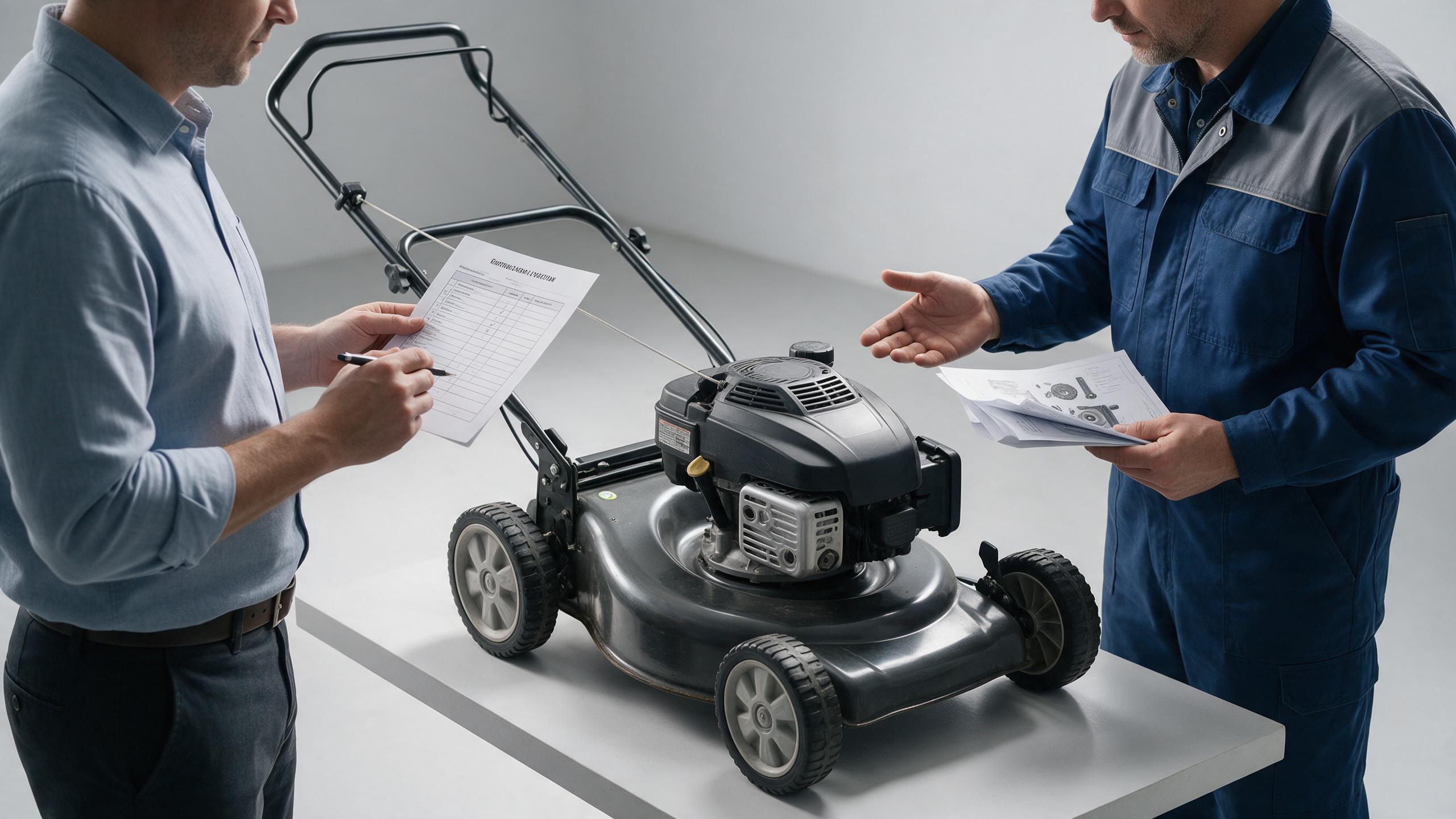
OEM cooperation should not begin with a large, untested commitment. Use samples and early orders as structured learning stages. Agree on acceptance criteria before sampling, record all changes in one revision log, and make the pilot order a test of communication as well as product quality.
A practical sequence is sample approval, a pilot order, delivery review, and then repeat-order planning. At each stage, capture open points: product issues, manual edits, carton damage, missing parts, inspection findings, and customer-service questions. Assign an owner and target date on both sides. This creates a record that a new contact can understand without reconstructing months of conversations.
The price tag may be the first number a buyer sees. After a season of returns, replacement parts, urgent freight, and rework, however, the operating cost deserves at least equal attention. A slightly different quoted price can be reasonable if the supplier provides steadier documentation, predictable change control, and a workable parts process. The point is not to accept higher cost without scrutiny; it is to compare the full commercial effect.
Make quality issues easier to report and resolve
Problems are unavoidable in physical products. The differentiator is whether the partnership turns a problem into an improvement. Define a simple non-conformance format that includes order number, product code, photos or video where appropriate, quantity affected, observed condition, and the requested decision. Avoid vague descriptions such as “poor quality,” which force both teams to debate the problem before they can correct it.
Ask the garden machinery supplier to respond with containment action, probable cause, corrective action, and a verification date. For a recurring matter, check whether the corrective action changed the work instruction, inspection point, component source, or packaging standard. A reply that merely promises greater attention does not create a reliable control.
During OEM cooperation, set practical boundaries too. A buyer may need a fast decision when a selling season is close; a supplier may need time to validate a design change. Stating those constraints early supports a more useful supplier relationship than treating every request as an emergency.
Plan after-sales support before the market asks for it
Garden machinery is maintained, repaired, stored, and used under varying conditions. For that reason, spare parts and service information should be part of sourcing discussions from the start, not an afterthought after a retailer reports a failure. Map the parts that dealers are likely to request, the minimum stock approach, part-number format, packing method, and technical support channel.
Where your range includes several machine types, clarify whether components are shared across models and which version identifiers are visible on the product and carton. This can reduce misidentification during service. It also gives both parties a factual basis for a warranty discussion rather than relying on memory.
Review the partnership on a fixed schedule
Long-term cooperation needs a cadence. A quarterly review is often enough for an established programme; a new programme may need a review after samples, first shipment, and the first selling period. Keep the meeting focused on a short scorecard:
- On-time delivery performance against the agreed window.
- Quality observations and status of corrective actions.
- Documentation, labelling, and market-readiness changes.
- Parts availability and service feedback.
- Forecast changes, capacity outlook, and upcoming product revisions.
Use the scorecard to decide what should change next, not simply to rate the supplier. For example, a supplier that meets production dates but repeatedly sends late document revisions may need a revised approval gate before shipment. A distributor that changes forecasts late may need a clearer freeze date. Partnership is practical when both sides accept measurable responsibilities.
A cooperation checklist for the next sourcing cycle
Before placing a repeat order, confirm that the approved product revision, quality criteria, commercial terms, documentation list, parts plan, and forecast assumptions are all current. Then agree on named contacts and an escalation path. This preparation makes global sourcing less dependent on individual relationships and more resilient when teams, demand, or product lines change.
The right garden machinery supplier is not defined by a single negotiation. Look for a partner that can show controlled product information, realistic planning, responsive corrective action, and a willingness to review the process with you. Build those habits early, and OEM cooperation can develop from a transactional purchase into a partnership that supports both market growth and day-to-day service.

 Hot News