
 EN
How to Choose the Bst Lawn Mower for Small, Medium, and Large Gardens?
Choosing a lawn mower is less about chasing a single specification and more about matching the machine to the work. As a garden-machinery technical consultant, I start with the same questions: how much turf is there, how open is the route, how quickly does it grow, and who will push, steer, store, and maintain the mower? Garden size matters, but slopes, access openings, trees, power access, and your lawn-care routine can change the answer.
A useful lawn mower choice should make regular cutting manageable without leaving you with a machine that is too large for tight turns or too small for the weekly workload. Use the guide below as a starting point, then compare the actual cutting width, drive system, battery capacity, and service terms on the model data sheet.
Start mower selection with the lawn, not the catalogue
Measure the mowable area rather than the whole property. Exclude patios, beds, sheds, and narrow passages, then note slopes and obstacles. A lawn mower with a wide deck can cover open ground efficiently, but it may be awkward around trees or through a side gate. Conversely, a compact model is easy to store and turn, yet a very narrow deck can make a large lawn feel like a long project.
Also consider turf growth and cutting frequency. University of Minnesota Extension recommends keeping a lawn at 3 inches or higher and removing no more than one-third of the leaf tissue in one mow. That rule affects cutting efficiency: waiting until turf is tall or damp puts more material through the deck at once, whatever lawn mower you own.
Small gardens: prioritize control, storage, and simple handling
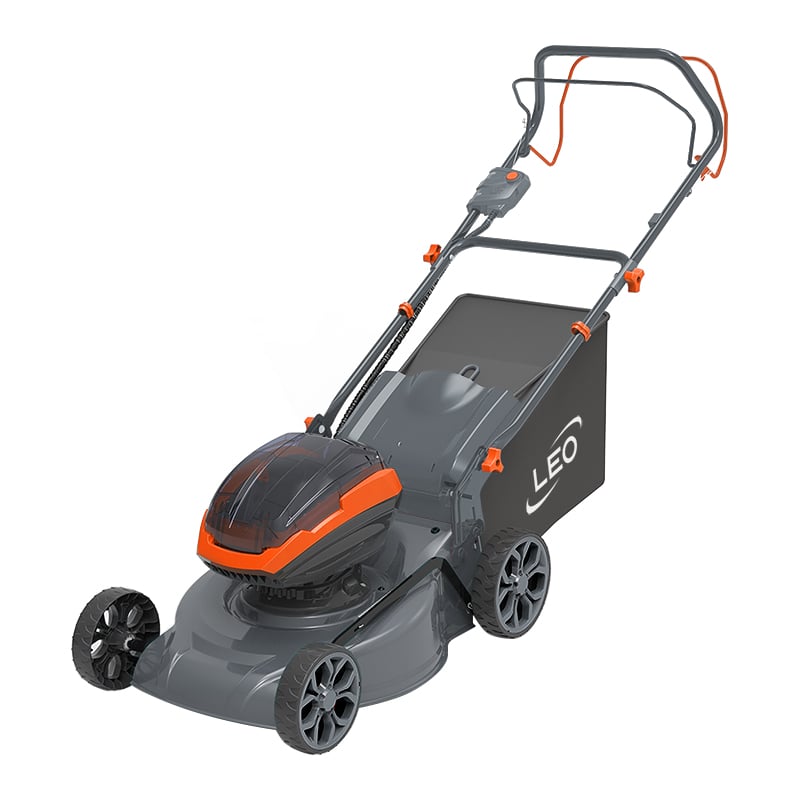
For a small, mostly level garden size, a compact push lawn mower is often the practical baseline. A corded electric model can suit a simple layout with an accessible outlet, provided the cable route is manageable. A cordless lawn mower removes the cable-management task and can be convenient where borders, furniture, or trees make a cord inconvenient. Check the stated runtime against the area and turf conditions; runtime changes with turf length, terrain, battery condition, and cutting height.
Look for a light chassis, sensible handle adjustment, and a deck width that fits access openings and storage. A small collector is not automatically a drawback if the lawn is cut regularly; it may be easier to lift and empty. If you use mulching, mow often enough that clippings are short and dry. Bagging gives an immediately tidy finish, while mulching can return fine clippings to the surface when conditions are suitable.
- Choose a compact lawn mower when access and storage are tight.
- Choose cordless power when cable routing would interrupt the job.
- Prioritize height adjustment for seasonal lawn care.
- Check battery, charger, and replacement-battery availability before purchase.
Medium gardens: balance cutting width with effort
A medium garden usually exposes the limits of an undersized lawn mower. The job is still suitable for a walk-behind machine, but a wider deck, a larger collector, or self-propelled drive can save time and effort. For a medium garden size with gentle slopes, a self-propelled cordless or petrol lawn mower is a reasonable starting point—though the choice changes if the site is very open, very steep, or cut infrequently.
Power source should follow the work pattern. A cordless lawn mower suits buyers who value lower routine maintenance and a quieter operating experience, provided the battery plan covers the real workload. A second compatible battery can be more useful than relying on an optimistic runtime estimate. A petrol lawn mower may suit longer sessions or heavier seasonal growth, but it brings fuel, oil, air-filter, and storage tasks. Neither approach is universally right.
Right, so—the first specification many people compare is motor or engine output. It matters, but deck width, traction, blade condition, turf moisture, and collector capacity often shape day-to-day cutting efficiency just as much. Consider a self-propelled lawn mower if pushing uphill or across uneven ground is tiring; it is not essential for every flat, compact lawn.
Large gardens: reduce passes without losing manoeuvrability
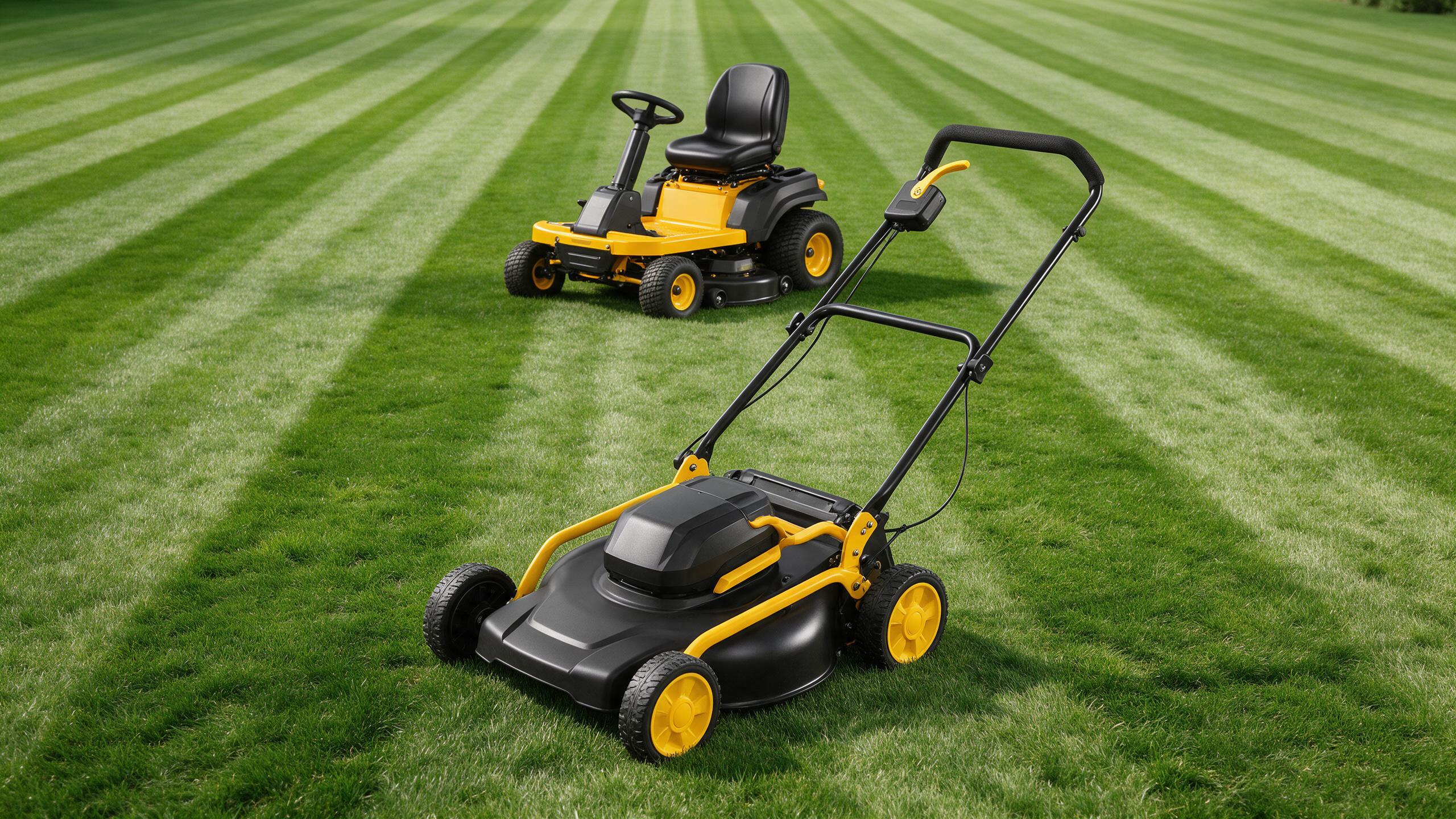
For a large, open garden size, the central question is how to cover ground efficiently while keeping control around edges. A robust walk-behind lawn mower may still work for a large lawn that has many narrow sections. Once the mowing time and physical effort become excessive, a ride-on lawn mower can make more sense. Its wider cutting path and seated operation are valuable when the route is open enough to use them.
Before moving to a ride-on lawn mower, map turning space, gate widths, storage access, and the number of obstacles. A large deck is inefficient if beds, posts, and trees force repeated reversing or leave many areas for a follow-up trim. On complex layouts, a manoeuvrable walk-behind lawn mower plus a separate edge tool may be a more workable combination than an oversized machine.
For large areas, ask about service intervals, spare parts, and local support as carefully as you ask about power. A lawn mower used frequently needs blades kept well-maintained, a clean underside, and routine checks appropriate to its power system. Accessible parts and clear maintenance information support steadier operation across the mowing season.
Features that change the everyday result
| Feature | When it helps | What to check |
|---|---|---|
| Adjustable cutting height | Seasonal growth and different lawn finishes | Range, adjustment method, and ease of use |
| Self-propelled drive | Slopes, uneven ground, and frequent mowing | Speed control and traction |
| Mulching option | Regular lawn care with short, dry clippings | Whether the deck and blade are configured for mulching |
| Turf collector | Formal finish or clipping removal | Capacity, full-bag indication, and emptying effort |
| Battery platform | Cordless mower selection and other garden tools | Compatible tools, charge time, and replacement availability |
Use this final lawn mower checklist
- Measure the true mowable area and the narrowest access point.
- List slopes, wet spots, trees, borders, and obstacles.
- Decide whether your lawn care routine favors collection, mulching, or both.
- Match the lawn mower deck width and drive type to the route, not area alone.
- For cordless models, plan for actual battery capacity, charging, and storage.
- For petrol or ride-on equipment, confirm the maintenance and parts support you can manage.
The right lawn mower is the one that matches your garden size, layout, mowing frequency, and tolerance for maintenance. Compare specifications at model level, keep blades well-maintained, avoid cutting overly wet or overgrown turf, and adjust height gradually through the season. Those habits improve the result from any well-matched lawn mower.

 Hot News