
 EN
How to Safely Operate a Garden Shredder at Home or Worksites?
A garden shredder can turn pruning waste into manageable chips, but it is not a tool to rush. Whether you are clearing a small garden or supporting a crew at a worksite, safe operation starts before the machine is switched on. A useful operating rule is this: use the machine exactly as its model-specific manual intends, keep people away from the feed area, and stop rather than improvise whenever something does not look right.
As a garden machinery specialist, I would start with the actual site and workload, not the sales specification. A garden shredder that is appropriate for dry twigs at home may need a very different setup and work plan when branches, uneven ground, vehicle movements, or several workers are involved. This safety guide gives a repeatable machine operation routine for both settings.
Start with the manual, the site, and the right operator
Before using a garden shredder, read the supplied operator manual for that exact model. It defines the permitted material, feed method, maximum branch size, maintenance intervals, guards, and shutdown procedure. Do not assume that two machines with similar hoppers work the same way. If a label is missing, a guard is damaged, or the emergency stop does not work as intended, take the garden equipment out of service until it is checked.
At home, choose a firm, level surface with enough clear space around the garden shredder for handling branches and for discharge. Keep children, pets, and visitors outside the work area. At a worksite, the responsible person should establish an exclusion zone, identify vehicle or pedestrian routes, assess ground stability, and make sure only trained or authorised operators take part. Noise, dust, poor lighting, wet footing, and overhead obstacles all change the machine operation plan.
Use PPE that fits the task
Wear eye protection or a face shield, hearing protection where required, sturdy footwear with good grip, and close-fitting work clothing. Gloves can protect hands while moving thorny or rough material, but they must not encourage you to reach into a hopper or towards moving parts. Tie back long hair and remove loose jewellery, drawstrings, scarves, or anything that could catch. For dusty, dry material, follow the manual and local risk assessment for suitable respiratory protection.
This point applies beyond home use too. A worksite safety guide should confirm that PPE is available, fits each operator, and is worn consistently. Replace cracked eye protection or worn footwear before starting; they are not items to make do with.
Complete a pre-start garden shredder check
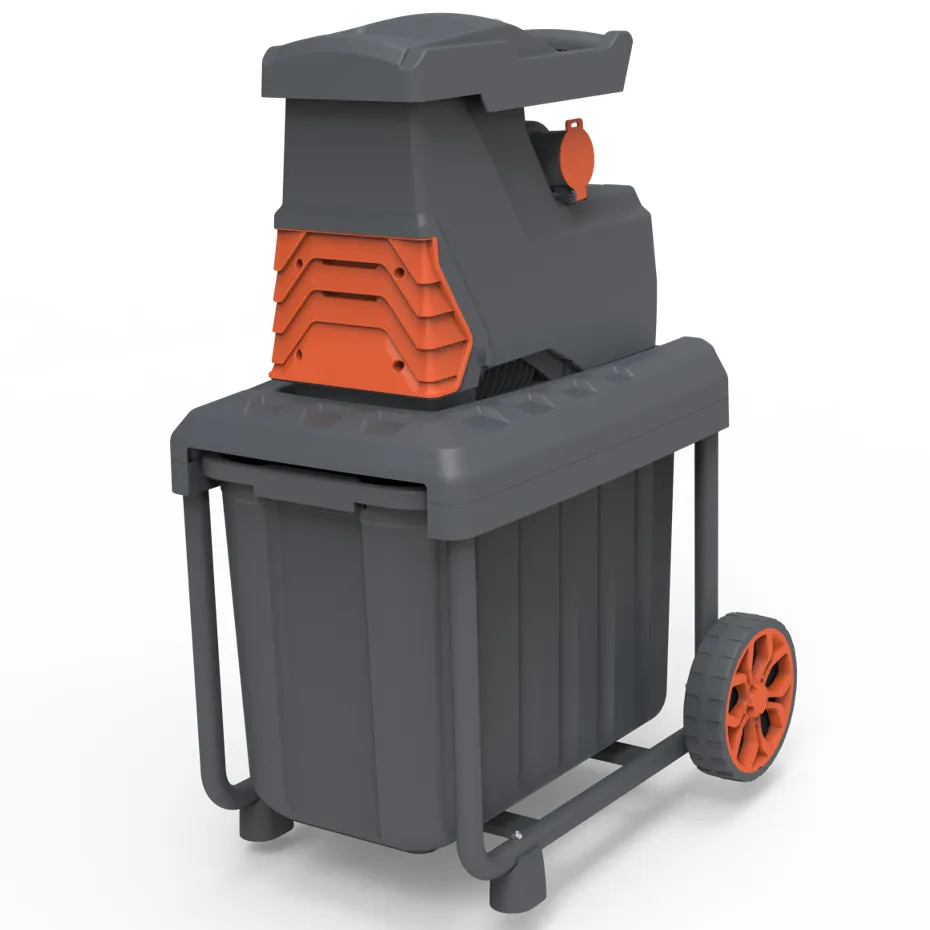
- Inspect the machine. Check the power cable, plug, fuel system, wheels, fasteners, hopper, discharge chute, guards, and collection area. Do not use a garden shredder with a damaged cable, fuel leak, loose guard, or altered safety device.
- Confirm controls. Locate the start/stop control, reverse function if fitted, and emergency stop before feeding material. Verify that all guards are in their normal operating position.
- Prepare the material. Remove stones, wire, string, metal, soil-heavy roots, and other foreign objects. Separate material that exceeds the manual's stated limits. A garden shredder is not a disposal route for treated timber, rubbish, or unknown waste.
- Plan the flow. Stack material so you do not need to step across the cable, discharge area, or another person's route. Keep a clear path to the stop control.
Do not start a garden shredder until the feed area and discharge zone are clear. In particular, make sure nobody is behind or below the discharge path. A clean setup makes user tips such as “feed slowly” achievable rather than theoretical.
Feed material steadily and stay outside the danger zone
Stand to one side of the feed opening where the manual permits, keep balanced footing, and feed one piece or a small manageable bundle at a time. Let the cutting system draw material in; do not push it with your hands, feet, a rake, or an improvised stick. Use only a manufacturer-approved pusher or tool if the manual specifies one. The moment material starts to bounce, snag, or pull unpredictably, stop feeding and move back.
A garden shredder is easier to manage when the operator is patient. Long branches may whip as they enter, while leafy or wet material can bridge near the hopper. That does not mean the machine is safe to clear while energised. Conditional advice matters here: if material is too awkward to control from a stable position, cut it down or set it aside rather than forcing the feed.
For worksite machine operation, one person should normally control feeding while others keep clear and pass material only when signalled. Avoid conversations, phone use, or task handovers beside a running garden shredder. Pausing to coordinate is safer than a rushed handoff near the infeed.
How to handle a blockage safely
Do not reach into a garden shredder to clear a jam. First stop the machine using its normal control or emergency stop as appropriate. Isolate its energy source exactly as the manual requires: disconnect electric power, remove the battery where applicable, or shut down and secure an engine-driven machine. Wait until every moving part has stopped. Then use the model-approved clearing method and tool. If you cannot clear it without removing a guard or guessing at the procedure, seek competent service support.
Do not disable an interlock, hold a switch in position, or remove a guard to “get one more load through.” Those shortcuts turn a manageable blockage into a serious exposure. On a worksite, communicate that the garden shredder is isolated before anyone approaches it, and prevent another person from restarting it.
Shut down, clean, and store the equipment deliberately
After the final feed, allow the garden shredder to clear material as instructed, stop it, isolate the power source, and wait for complete standstill. Brush away debris from external surfaces only after isolation. Check for damage, unusual vibration, loose fasteners, or a full collection area. Record defects at a worksite; at home, label the machine and arrange repair before its next use.
Store garden equipment in a dry, secure place. Keep cables, batteries, fuel, and the garden shredder itself according to the manufacturer’s storage directions. Basic maintenance—such as cleaning, blade care, and fastener checks—belongs to the published maintenance schedule, not to a guess made after a difficult session.
A final safety checklist
- Read and follow the exact model manual before every new type of task.
- Use a stable site, clear exclusion zone, suitable PPE, and working guards.
- Inspect controls and confirm the stop procedure before starting the garden shredder.
- Feed only permitted, prepared material and keep hands outside the hopper.
- Stop, isolate, and wait for complete standstill before any jam-clearing or cleaning.
- For worksites, use trained operators, clear signals, and a documented risk assessment.
The most useful user tips are the ones that still work when the job gets messy: slow down, protect the feed area, and do not trade a safety control for speed. With that routine, a garden shredder can be a productive part of garden maintenance without becoming the most hazardous part of the day.
 Hot News