
 EN
What Are Common Maintenance Mistakes with Gasoline Lawn Mowers?
A gasoline lawn mower can be a dependable choice for larger lawns and demanding turf conditions, but its engine and cutting system need regular attention. The most expensive maintenance errors are usually small habits repeated over a season: old fuel left in the tank, an ignored air filter, overdue oil, or a deck packed with wet cuttings. This user guide explains what goes wrong, why it matters, and how to build a sensible routine around your own manual.
Why small maintenance errors turn into engine problems
A gasoline lawn mower combines a small combustion engine with a high-speed cutting deck. Clean air, suitable fuel, correct oil and an unobstructed deck each support the next task. When one part is neglected, symptoms can spread: hard starting may lead to repeated pull-cord attempts, poor airflow can make the engine run poorly, and a dull blade can overload the engine while leaving an uneven cut.
The model-specific user guide is the authority for oil grade, service intervals, spark-plug specification and safe procedures. Use the checklist below as a planning aid, then match it to the instructions for your mower.
1. Leaving fuel in the mower through a long storage period
Fuel is often treated as though it stays fresh indefinitely. In practice, gasoline can deteriorate during storage and leave deposits in the fuel system. A gasoline lawn mower that ran normally in autumn may then crank poorly or surge in spring. This is a common source of avoidable engine problems.
Before extended storage, follow the user guide for your engine and local fuel rules. The approved procedure may call for running the fuel system as directed, using an appropriate stabilizer, or taking another specified storage step. Do not guess from a different engine design, and do not store fuel in unsuitable containers.
2. Checking the oil only after the engine sounds wrong
Waiting for noise, heat, or a warning sign is a maintenance error. Engine oil should be checked with the mower on a level surface and with the engine safely stopped, following the manual's method. Low oil, contaminated oil, or an incorrect oil type can contribute to wear and poor operation.
Service timing varies by engine. As an example of why the manual matters, one small-engine maintenance source advises an early first oil change and then seasonal or hour-based service. Dusty conditions, frequent mowing, slopes and high temperatures can change the practical interval. Record the date and running hours when you service the gasoline lawn mower so mower repair decisions are based on a real history rather than memory.
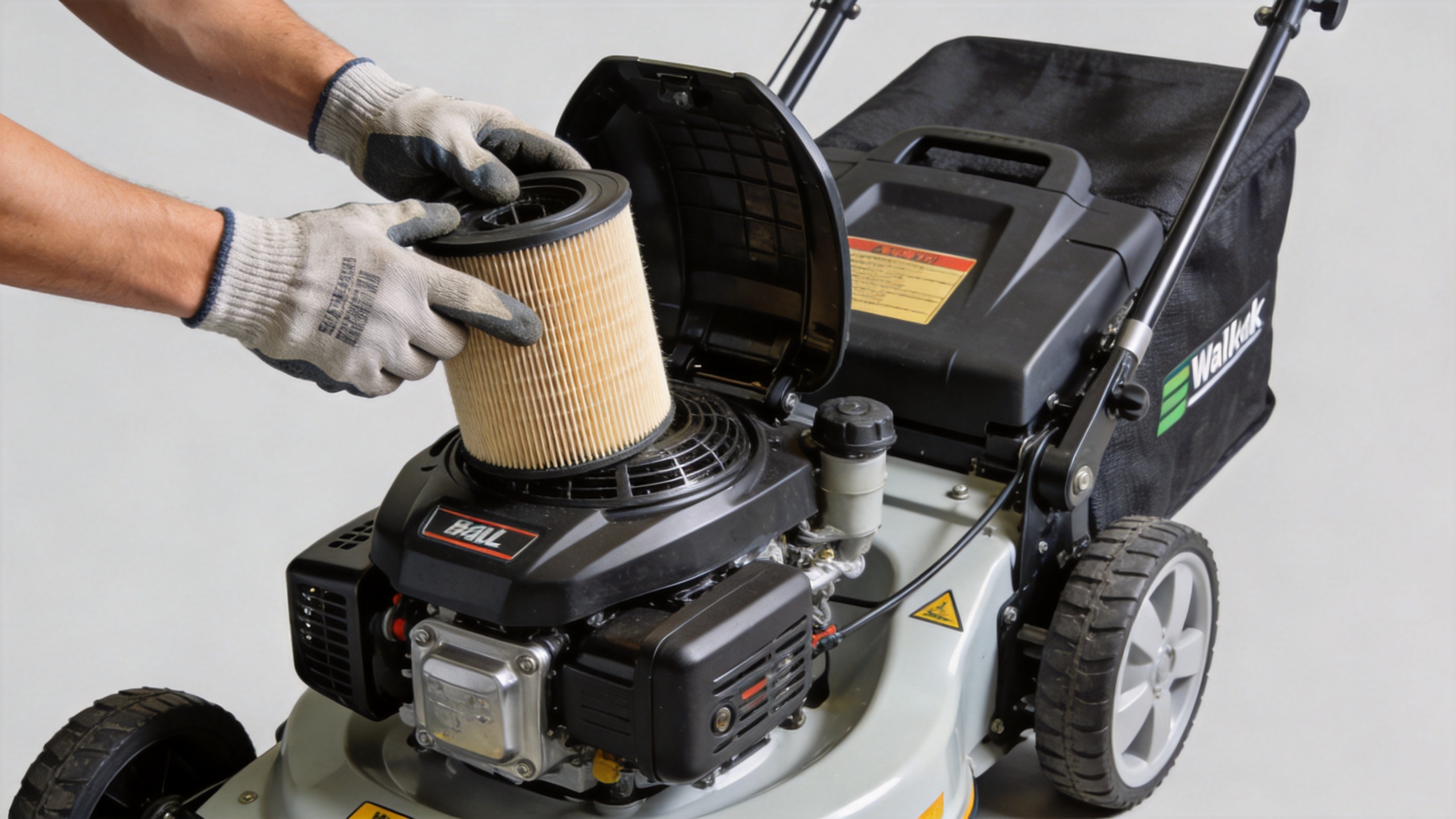
3. Ignoring a dirty air filter
An air filter that looks only slightly dusty can still restrict airflow. The result may be difficult starting, reduced power, excess fuel use, or a mower that struggles in dense turf. Cleaning the outside of the cover while leaving the filter unchanged does not solve the underlying issue.
Inspect the filter at the interval in the user guide and more often in dry, dusty conditions. Foam, paper and combination filters have different service methods. Replace or clean only as the manufacturer specifies; using oil on a filter that is intended to remain dry is another route to engine problems.
4. Treating the spark plug as a lifetime component
A worn, fouled or improperly gapped spark plug can cause hard starting, uneven running and loss of power. It is tempting to keep cleaning the same plug, but a routine inspection is more useful when paired with the correct replacement interval and plug specification.
With the engine cool and the ignition lead disconnected, inspect the plug according to the manual. Look for deposits, damaged insulation or signs that the engine is not running normally. If the plug repeatedly fouls, do not simply fit another one and continue mowing; investigate the surrounding fuel, air-filter and oil-service history or seek qualified mower repair support.
5. Letting cut material build up under the deck
Deck cleaning is not only about appearance. Wet clippings can collect around the blade area and outlet path, reducing airflow and degrading cut quality. The mower may work harder, leave cuttings in piles, or fail to collect cut material efficiently. A packed deck also makes corrosion easier to overlook.
After the machine has cooled, disconnect the spark-plug lead and use the lifting or cleaning method stated in the user guide. Do not reach beneath the deck while the engine could start. Removing debris with the mower tilted the wrong way can introduce oil or fuel into places where it does not belong, so follow the model-specific orientation instructions.
6. Mowing with a dull, bent, or damaged blade
A dull blade tears turf blades instead of cutting them cleanly. That can make a lawn surface look ragged and can increase the load on a gasoline lawn mower. Striking stones, roots or hidden metal can bend or crack a blade, creating a safety issue rather than a simple sharpening job.
Inspect the blade after a strike and at regular service intervals. Replace a damaged blade with the correct approved part and have the blade balanced if the user guide requires it. Avoid improvised grinding or fitting a blade that does not match the mower specification; vibration after service is a reason to stop and inspect the mower before more use.
7. Skipping fastener, cable, and wheel checks
Oil and fuel get most of the attention, while loose handle hardware, worn cables, damaged wheels and weak drive controls may be missed. These maintenance errors can affect control and make a straightforward task feel like a major mower repair later.
- Before mowing, look for loose fasteners, frayed cables and fluid leaks.
- Confirm that the stop control, drive control and discharge or collection components work as intended.
- Check wheel hardware and cutting-height settings for secure, even adjustment.
- Stop using the machine if a control does not return correctly or a safety device is damaged.
8. Using one routine for every season
A gasoline lawn mower needs different attention before spring use, during heavy cutting periods and before storage. A short pre-mow inspection catches immediate issues; a seasonal service looks deeper at oil, filter, plug, blade and deck; storage preparation addresses fuel and cleanliness. Treating all three moments as the same job often leaves the important work until a breakdown occurs.
| When | Focus | Questions to ask |
|---|---|---|
| Before each use | Safety and visible condition | Are the controls, blade area, oil level and fasteners ready for use? |
| During the season | Airflow, lubrication and cutting quality | Does the filter need attention? Is the oil due? Is the blade cutting cleanly? |
| Before storage | Fuel-system and corrosion care | What exact storage process does this user guide specify? |
A practical user guide for avoiding unnecessary mower repair
Keep a small maintenance log with dates, operating hours, oil service, filter service, spark-plug work, blade inspection and any unusual symptoms. It makes trends easier to notice and gives a technician useful context if mower repair becomes necessary. Use genuine or correctly specified service parts, work only with a cool engine in a ventilated area, and keep ignition sources at a safe distance from fuel.
Most importantly, do not try to diagnose every symptom by changing multiple parts at once. Start with the user guide and the basic checks: fuel condition, oil level, air filter, spark plug, blade and deck cleanliness. A consistent routine helps a gasoline lawn mower stay ready for the next cut while making small maintenance errors easier to correct before they become larger engine problems.


 Hot News