
 EN
EN
Assessing Your Terrain: Slope, Soil, and Lawn Complexity
Before selecting a lawn mower, evaluate your yard’s physical characteristics—slope, soil, and layout—to ensure safety, performance, and longevity of both equipment and turf. Slope is the most critical safety factor: even mowing across a modest incline can destabilize equipment. A practical walking test—feeling noticeably off-balance or needing to shift your center of gravity—suggests a gradient exceeding 15°. For precision, use a string, line level, and stake to calculate rise-over-run and convert to percent grade. Residential lawns typically fall into four slope classes: gentle (<10°), moderate (10–15°), steep (15–20°), and extreme (>20°). Each imposes distinct limits on mower type and operator technique.
Soil composition directly affects traction and cut quality. Clay becomes slick when wet, increasing wheel slip; loose sand or dry silt offers poor grip and may bog down lighter machines. A simple soil test—squeezing a moist handful into a ball and observing how it holds shape and drains—reveals texture, compaction, and drainage behavior. Persistent standing water after rain signals poor percolation, often resulting in soft, rut-prone ground during mowing.
Lawn complexity extends beyond slope: scattered trees, flower beds, uneven hummocks, and frequent elevation changes create mixed-terrain conditions. In such cases, no single slope category applies—maneuverability, deck clearance, and contour-following capability become just as important as raw climbing ability. Together, these factors determine which mower features will safely and efficiently handle your actual terrain.
Lawn Mower Types and Their Terrain Suitability
Matching a lawn mower to your terrain’s slope profile is essential for safety and consistent cut quality. A machine optimized for flat lawns may become unstable—or simply ineffective—on gradients. Key differentiators include center of gravity, drive configuration, and traction design. Below is a comparative overview of common mower types by slope capability and handling considerations.
Push, Self-Propelled, Riding, Zero-Turn, and Robotic Mowers Compared by Slope Capability
| Mower Type | Recommended Slope Limit | Key Characteristics |
|---|---|---|
| Push Mower | Up to 5° | Lightweight, manual effort; best suited for flat, small lawns. |
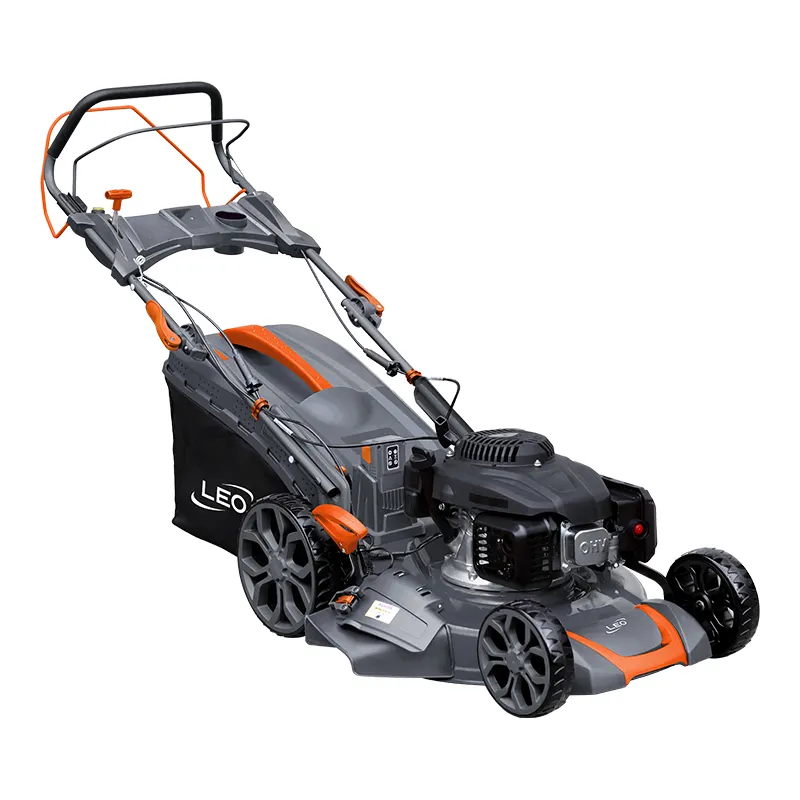
| Self-Propelled | 10°–15° | Front- or rear-wheel drive reduces operator strain; rear-wheel drive models offer superior uphill traction. |
| Riding Mower | 10°–15° | Wide stance and low center of gravity; always mow up and down slopes—not across—to prevent rollover. |
| Zero-Turn Mower | Up to 15° | Exceptional maneuverability, but reduced traction on wet grass; drive slowly and avoid sharp turns on inclines. |
| Robotic Mower | 10°–20° (model-dependent) | Advanced units use boundary wires and terrain sensors; steep-slope models feature low-profile frames and high-traction wheels. |
Beyond conventional options, remote-controlled slope mowers can safely handle gradients exceeding 30°—ideal for extreme embankments where walk-behind or ride-on units pose unacceptable risks. For most residential properties with moderate slopes, a self-propelled or riding mower with appropriate drive technology (detailed below) provides optimal balance of safety, control, and efficiency. Always verify the manufacturer’s certified slope rating before operation—exceeding it significantly increases tip-over risk and loss of control.
Critical Lawn Mower Features for Challenging Terrain
Selecting a mower for rugged terrain hinges on how drive systems and traction features work together. The right combination prevents wheel spin, scalping, and instability on slopes or uneven ground.
Drive Systems: AWD, FWD, and RWD Performance on Gradients and Uneven Ground
Front-wheel-drive (FWD) mowers pull themselves up moderate inclines and excel in tight spaces, but lose rear-wheel traction as weight shifts backward on steeper grades. Rear-wheel-drive (RWD) designs benefit from engine mass over the drive axle, delivering strong grip on flat ground and mild slopes—though front-end lift remains a concern when ascending. All-wheel-drive (AWD) systems engage both axles continuously, maintaining traction in muddy patches, loose soil, or variable pitch. AWD mowers are commonly rated for gradients up to 30%, making them ideal for properties with rolling or irregular terrain. Many pair AWD with hydrostatic transmissions, enabling smooth, variable-speed control that sustains steady progress without jerking—reducing slide risk on rough or slippery surfaces.
Traction Enhancements: Tire Design, Deck Width, and Weight Distribution
Tire choice plays a decisive role: deep-lug treads provide bite on soft or slick turf, while wider turf-safe tires distribute weight to minimize rutting. Narrow decks improve trimming access but may compromise stability on side slopes. Floating decks adapt to ground contours, reducing scalping over bumps and dips. Weight distribution is equally vital—low, centered mass improves roll resistance, and removable wheel weights can further lower the center of gravity. On extreme slopes, tracked (crawler) mowers distribute load evenly and reliably handle inclines exceeding 40° without digging in. Regardless of type, regularly adjusting tire pressure and keeping the undercarriage free of debris ensures consistent traction performance across mud, wet grass, and uneven terrain.
FAQ
What is the best way to measure the slope of my lawn?
You can measure the slope using a string, line level, and stake to calculate the rise-over-run. Convert this measurement into a percent grade for precise results.
Which lawn mower is best suited for steep slopes?
For steep slopes exceeding 15°, robotic mowers or remote-controlled slope mowers are recommended for optimal safety and performance.
How important is soil composition for choosing a lawn mower?
Soil composition directly impacts traction and cut quality. For instance, clay can become slippery when wet, while loose sand may cause wheel slip or bogging.
Can I use a zero-turn mower on uneven terrain?
Yes, but exercise caution. Zero-turn mowers are highly maneuverable but may struggle with traction on uneven surfaces, especially on wet grass or inclines.