
 EN
EN
Why Is Lawn Mower Selection Important for Efficient Garden Management?
As a garden machinery specialist with hands-on experience evaluating lawn mowers across a wide range of garden conditions, the key question I consistently ask buyers is not which brand they prefer — it is whether the machine they are considering actually matches the terrain, cutting area, and operational demands they will put it through. Choosing the right lawn mower is one of the most consequential decisions in garden management, yet it remains underestimated by a significant number of buyers who focus primarily on price or brand reputation.
Lawn management efficiency is not simply a matter of how fast a mower cuts. It is the result of pairing the right outdoor equipment to the specific conditions of your garden — and getting that pairing wrong carries real costs in time, labour, and long-term turf quality.
Why Mower Choice Directly Affects Your Results
A lawn mower selected without reference to the actual garden will underperform in practice, regardless of its specifications on paper. A walk-behind petrol mower with a large cutting deck, for example, becomes difficult to manoeuvre in a garden with tight corners, raised beds, and narrow paths — even if the engine power is more than adequate. Conversely, a compact cordless mower may be an excellent fit for a medium-sized urban garden but will fall short on a property exceeding half an acre, where battery runtime becomes a limiting factor mid-session.
This matters for lawn management because inconsistent coverage and repeated interruptions lead to uneven cutting patterns, stress on the grass, and increased recovery time between mowing sessions. Efficient garden management depends on completing cuts in a single pass, at the right height, without mechanical compromises that force workarounds.
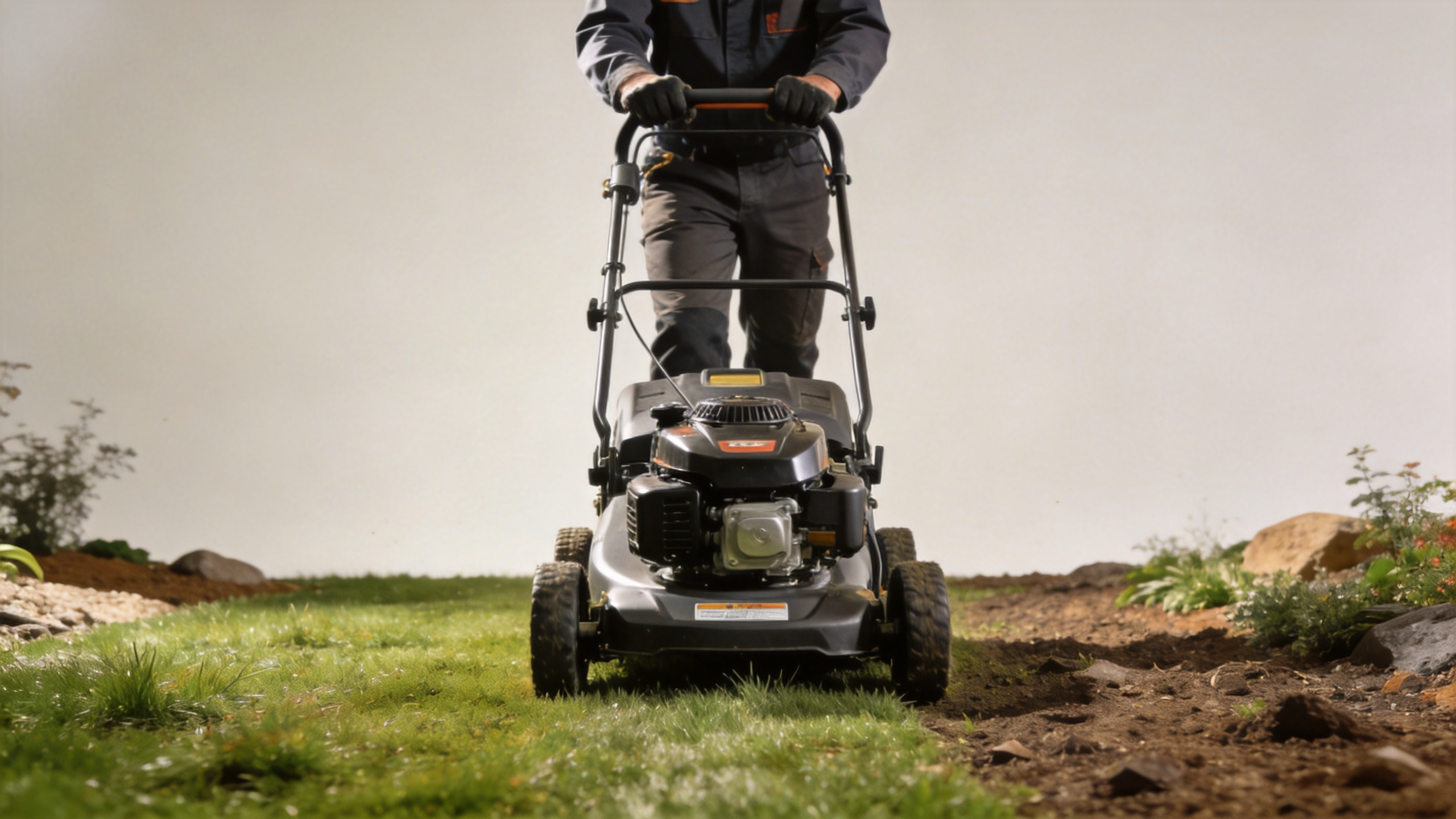
Four Factors That Define the Right Lawn Mower for Your Garden
Garden Size and Cutting Area
Garden area is the first and most practical filter. The widely accepted thresholds for mower type selection are as follows: reel push mowers and compact electric models are well-suited to gardens under a quarter of an acre; standard walk-behind lawn mowers — both petrol and cordless — handle areas up to around half an acre comfortably; self-propelled models become preferable once the cutting area exceeds half an acre, because they reduce operator fatigue over extended sessions; ride-on mowers and zero-turn models are designed for properties where walk-behind operation would be inefficient or physically demanding over time.
If your garden falls at the upper edge of a size threshold, it is worth planning for it — choosing a mower only capable of handling your current area without any margin will leave you replacing equipment sooner than expected as the property or usage demands evolve.
Terrain Type and Gradient
I used to evaluate lawn mowers primarily on engine output until I worked with a distributor whose customer feedback repeatedly pointed to poor results on sloped residential plots in Southern Europe. The problem was not the machines — it was that flat-terrain mowers were being sold into hilly garden conditions. Terrain-matched torque and drive systems matter considerably more than peak horsepower when the ground is uneven.
On smooth, level ground, most lawn mower types will perform adequately. Rough, sloped, or uneven terrain is a different matter — a self-propelled drive system stops being a convenience feature and becomes a functional requirement. On gradients exceeding 15 to 20 degrees, ride-on models with appropriate hill-holding and weight distribution are the relevant category — walk-behind mowers on steep inclines create both quality and safety problems.
Grass Type and Growth Rate
Different grass species and growth habits place different demands on a lawn mower's cutting mechanism. Fine, slow-growing grass types require less frequent cutting and respond well to precision cutting decks, including reel mowers. Dense, fast-growing varieties — particularly those common in warmer European climates or Latin American gardens — demand more frequent mowing cycles and benefit from larger collection capacity and blade designs optimised for volume throughput.
Mulching capability is a relevant landscaping tool consideration here. Where clipping volume is high, a mower with an integrated mulching deck can return fine material to the lawn surface, reducing disposal effort and supporting turf nutrition. Not all lawn mowers offer this as standard, so it is worth confirming before purchase if mulching is part of your garden management approach.
Usage Frequency and Operational Context
A lawn mower used once a week in a domestic setting has different durability and maintenance requirements than one used daily in a professional landscaping context. Homeowners managing their own garden tend to prioritise ease of starting, handlebar ergonomics, and storage footprint. Professional landscaping operators, in contrast, weight duty cycle, service intervals, and spare parts availability more heavily — the cost of a machine sitting idle during peak season far outweighs any initial purchase saving.
Understanding the Main Lawn Mower Categories
Each main lawn mower category has genuine advantages — it depends on your garden's specific combination of size, terrain, and operational demands.
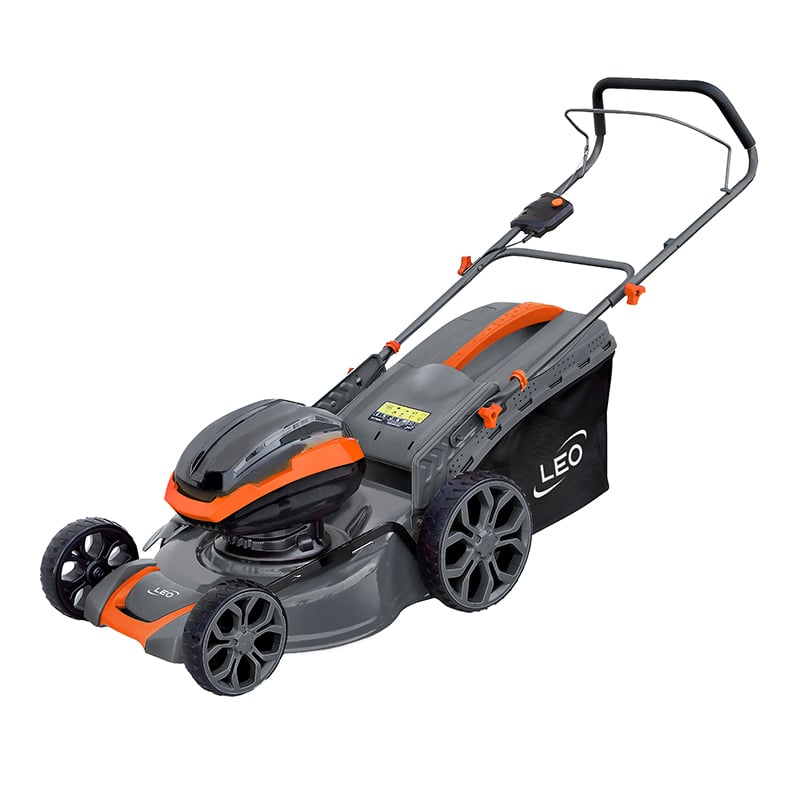
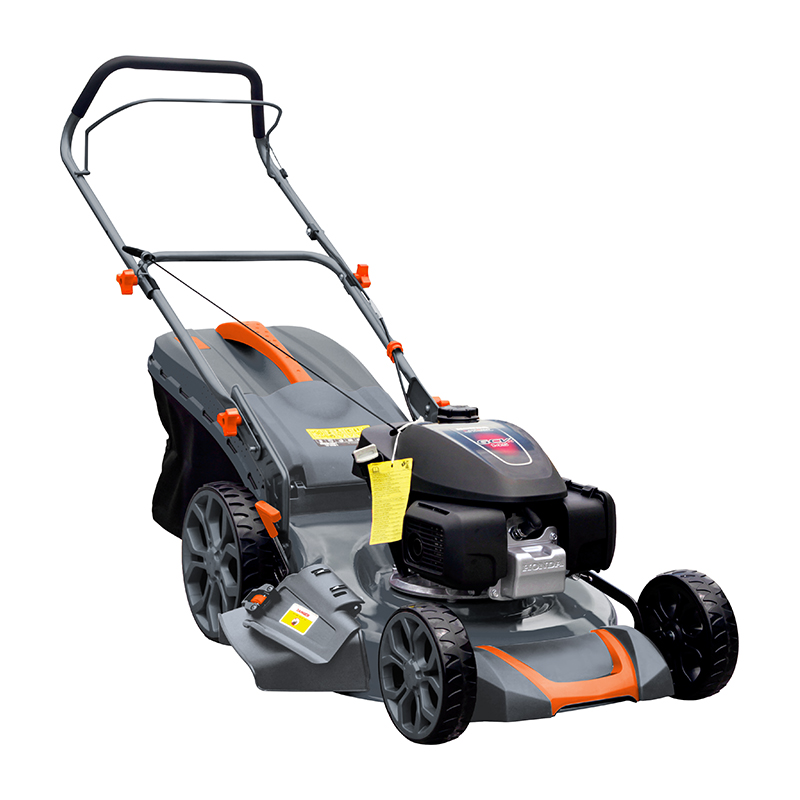
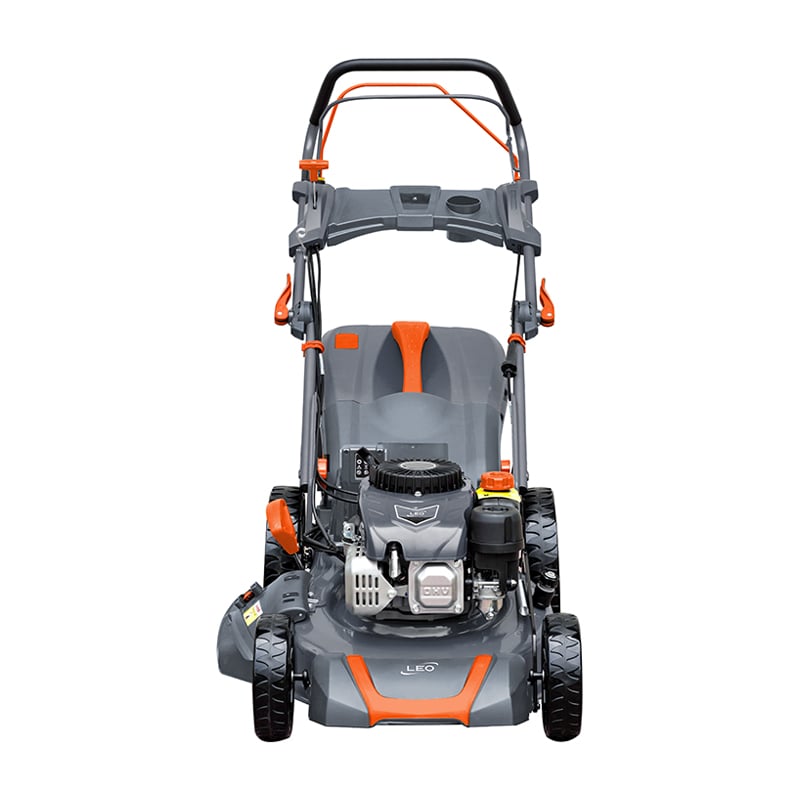
Push mowers remain appropriate for small, flat gardens where minimal physical effort is acceptable. Self-propelled petrol mowers deliver continuous cutting power without runtime limits, making them suitable for larger gardens and more demanding mowing schedules. Cordless electric mowers enable cable-free operation and score well on handling and manoeuvrability, though buyers should confirm that battery capacity aligns with their full garden area before committing. Ride-on mowers significantly reduce operator effort on large properties and bring efficiency gains that are measurable in time saved per session. Consumer Reports testing of walk-behind models showed that gas mowers averaged 4.7 out of 5 for cutting evenness versus 4.5 for battery models, while electric models led on handling with 4.2 against 3.8 for gas — reinforcing the point that each type has real strengths rather than one category being universally superior.
For buyers comparing options across these categories, a lawn mower comparison guide oriented to commercial and professional use can provide a useful framework for evaluating trade-offs by terrain and garden scale. You can explore that in more detail at Lawn Mower Comparison for Commercial Landscape Projects. Manufacturers with broad product portfolios, such as LEO Garden Machinery, typically offer range guidance that maps mower type to application by area, terrain, and usage intensity.
Looking Beyond the Purchase Price
One of the most consistent misconceptions I encounter among first-time buyers is evaluating a lawn mower purely on its retail price. The upfront cost is only one component of what the machine will actually cost over its service life. Maintenance requirements, blade replacement frequency, engine service intervals, fuel or battery costs, and eventual repair expenses all factor into the total cost of ownership.
A lower-priced outdoor equipment option may appear attractive at the point of purchase but prove more expensive over a three-to-five-year horizon if it requires more frequent servicing, uses a proprietary battery system, or has limited spare parts availability in the buyer's market. A higher-specification machine that is well-matched to the actual workload, on the other hand, can deliver lower running costs per hour over the same period. Efficient lawn management takes this longer view into account from the selection stage.
Efficient Lawn Management Starts With the Right Equipment
Efficient garden management is not just about technique — it is about having landscaping tools that are genuinely appropriate for the conditions they will be used in. The right lawn mower reduces the number of passes required to complete a cut, maintains consistent cutting height across variable terrain, and operates without the mechanical strain that leads to premature wear. Over a full growing season, the difference between a well-matched and a poorly matched mower can represent hours of additional labour and measurably poorer turf results.
Mowing efficiency is ultimately a function of fit: fit between machine capability and garden demand. Before selecting a lawn mower, it is worth spending the time to map out the garden's actual size, gradient, grass type, and how frequently you intend to cut — and then matching those parameters to the specifications of the machines you are evaluating. That process, rather than brand preference or price alone, is the foundation of efficient, sustainable lawn management.
 Hot News